

By Laura M. Nesbitt, Founding Member, The Nesbitt Law Firm
Updated September 2026 · 6 min read
A wage garnishment can cut into a paycheck fast, but a creditor cannot simply call an employer and start taking money. If money is being withheld from a paycheck, inspect the underlying court order immediately — procedural errors in garnishment paperwork are common, and Ohio law gives a debtor specific, time-limited ways to catch them.
The table below shows how the cap changes depending on the type of debt.
| Debt Type | Maximum Garnishment Cap | Primary Authority |
| Ordinary Consumer Debt | Lesser of 25% of disposable earnings, or the amount above 30× the federal minimum wage | 15 U.S.C. § 1673 / Ohio Rev. Code Ch. 2716 |
| Child Support / Alimony | 50%–65% of disposable earnings, depending on arrears and other dependents | 15 U.S.C. § 1673(b) |
| Federal Tax Levies | Dollar-based exemption tied to the standard deduction — not a flat percentage | 26 U.S.C. § 6334 |
| Other Federal Debt (e.g., defaulted student loans) | Up to 15% of disposable pay | 31 U.S.C. § 3720D |
How Much of Your Paycheck Is Protected
Under the federal Consumer Credit Protection Act, 15 U.S.C. § 1673, the maximum amount subject to garnishment in a workweek is the lesser of 25% of disposable earnings or the amount by which earnings exceed 30 times the federal minimum hourly wage. “Disposable earnings,” defined in 15 U.S.C. § 1672, means what’s left after deductions required by law — not gross pay.
Support obligations, certain tax debts, and some bankruptcy-related orders don’t follow the 25% rule — see the table above for the specifics. Compare the deduction on the pay stub to the correct row before assuming a number is wrong.
Ohio adds its own layer on top of the federal floor. Property and earnings exemptions under Ohio Rev. Code Chapter 2329 can shield additional amounts in some circumstances, so the federal 25% figure isn’t always the last word on what a creditor can actually collect.
What to Do When You Notice a Wage Garnishment
Take these steps immediately — don’t assume the deduction is correct just because a court order exists:
- Review the pay stub and identify the creditor, court, case number, or garnishment description shown by payroll.
- Ask the employer or payroll department for the garnishment order and any instructions they received about the amount to withhold.
- Obtain the underlying judgment and the garnishment paperwork from the court involved.
- Check the amount claimed — principal, interest, and court costs — against the judgment and the amount actually owed.
- Confirm whether the required Ohio demand notice was received and whether its timing lines up with the law.
- Look for other garnishments or withholding orders that might be affecting the same paycheck.
- If the calculation, notice, judgment, or paperwork looks off, have an Ohio attorney review the documents and determine whether an objection, exemption, trustee arrangement, bankruptcy, or another remedy applies.
How Ohio Wage Garnishment Works
A judgment creditor has to use Ohio’s statutory garnishment process rather than simply contacting an employer directly. Ohio Rev. Code § 2716.01 allows a creditor to garnish personal earnings only through a formal proceeding conducted under Chapter 2716.
A Written Demand Comes First
After winning a judgment, a creditor seeking a garnishment has to make a written demand on the debtor first. Under Ohio Rev. Code § 2716.02, that demand goes out at least 15 days but no more than 45 days before the garnishment order is sought. The demand also has to tell the debtor how to avoid the garnishment — by paying, using the statutory payment option, or applying for a trustee. Mark that 15-day window on a calendar the moment a demand arrives; it’s the narrowest opportunity to act before the garnishment order is filed.
The Creditor Has to File a Sworn Affidavit — and Where Depends on the Amount
Under Ohio Rev. Code § 2716.03, starting the garnishment requires the creditor to file an affidavit with specific information: the debtor’s name, the employer’s name and address, confirmation the demand was made, and details about payment status. In Franklin County, where the debt determines the venue: judgments of $15,000 or less are filed in Franklin County Municipal Court, and anything above that goes to the Franklin County Court of Common Pleas. Filing in municipal court also requires the $85 garnishment fee, a copy of the 15-day demand, and proof of mailing — and once the order issues, the debtor generally has five business days after receiving the Notice to the Judgment Debtor to request a hearing and dispute it.
That affidavit has to be accurate to hold up. A wrong address, an outdated employer, or a balance that doesn’t match the judgment are all grounds to challenge the garnishment — a court file existing doesn’t mean everything in it is correct.
How Long It Lasts
An Ohio personal-earnings garnishment runs as a continuous order under Ohio Rev. Code § 2716.041: withholding continues each pay period until the judgment is satisfied, unless a trustee appointment, a bankruptcy stay, or a higher-priority garnishment order changes things.
Can You Challenge a Wage Garnishment in Ohio?
Look closely at a garnishment any time the judgment, notice, calculation, priority, or withholding looks wrong. A court order existing doesn’t guarantee every number on a paycheck is right. Check these specific points:
- Whether the debt and judgment actually belong to you.
- Whether the amount claimed matches the judgment plus permitted interest and costs.
- Whether Ohio’s written demand was made and properly documented.
- Whether the garnishment was calculated using the right earnings and limits.
- Whether another garnishment or higher-priority order is already affecting your pay.
- Whether an available exemption was overlooked.
- Whether the judgment has already been paid, settled, or vacated.
- Whether a bankruptcy filing changes what the creditor can collect.
None of these automatically invalidate a garnishment on their own — but each is a specific, checkable fact, not a guess, and the right response depends on which one applies.
What Happens If Two Creditors Garnish the Same Paycheck?
Multiple garnishments can make a paycheck hard to make sense of. Federal law looks at the total, aggregate amount of disposable earnings subject to garnishment across all orders — a second creditor doesn’t get to independently take another 25% on top of the first. Ohio’s rules on priority and continuous orders, addressed in Ohio Rev. Code § 2716.041, determine how competing orders stack against each other. If more than one deduction shows up on a paycheck, get copies of every active order and review them together — reviewing them one at a time won’t reveal whether the combined total is lawful.
Can Bankruptcy Stop a Wage Garnishment?
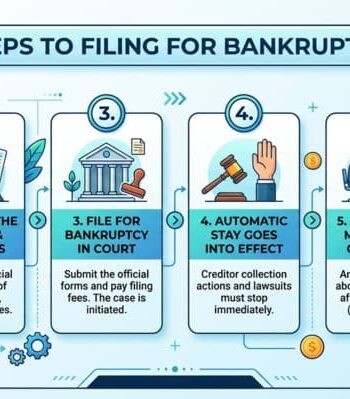
Filing bankruptcy triggers the automatic stay under 11 U.S.C. § 362, which halts most collection efforts — including most wage garnishments — the moment the case is filed.
That protection isn’t absolute. Domestic support obligations are carved out under 11 U.S.C. § 362(b)(2), so garnishments for child support or alimony keep going even after filing. Chapter 7 can discharge qualifying debts outright, ending the garnishment along with them. Chapter 13 doesn’t erase debt as fast, but folds it into a court-supervised repayment plan, which also stops the garnishment while the plan is active. Which option makes sense turns on the debt, the income involved, and what’s already been garnished.
Can Your Employer Fire You Over a Garnishment?
Federal law gives some protection here. Under 15 U.S.C. § 1674(a), an employer can’t discharge an employee because their earnings were garnished for a single debt. That protection has limits — it doesn’t cover every employment decision or every situation involving multiple debts — so evaluate a specific situation on its own facts.
A Look at How These Cases Play Out
A fact pattern like this comes up often enough to be worth describing: an employee in Franklin County noticed their paycheck had dropped by nearly a third after a garnishment order was filed over a credit card debt. On its face, the withholding looked like it might simply be the cost of the debt catching up with them.
A closer look at the underlying affidavit showed two separate garnishment orders had been stacked on the same paycheck without accounting for the combined 25% federal cap — an error in how the employer’s payroll department applied the orders, not something the employee had any way to catch on their own. Once the discrepancy was raised with the court, the withholding was corrected going forward, and a portion of what had been improperly withheld was recovered.
This example reflects a pattern seen across wage garnishment matters generally; details have been generalized to protect client confidentiality. Every case turns on its own facts, and past results don’t guarantee a similar outcome in a different case.
What to Bring If You Ask an Attorney to Review a Garnishment
- Recent pay stubs showing the garnishment deduction.
- The garnishment order or notice the employer received.
- The Ohio written demand or other notices received directly.
- The underlying judgment, if it’s available.
- Letters or payment records from the creditor or a collection agency.
- Information about any other active garnishments or withholding orders.
- Recent bankruptcy filings or court orders, if applicable.
- Anything showing the debt was paid, settled, disputed, or otherwise resolved.
Frequently Asked Questions
How much can a creditor garnish from my paycheck in Ohio?
For an ordinary debt, the lesser of 25% of disposable earnings or the amount above 30 times the federal minimum wage. Support obligations, tax levies, and other federal debts follow different formulas — see the table above.
Can a creditor garnish my wages without notifying me first?
No — Ohio requires a written demand 15 to 45 days before the garnishment order is sought. If that notice never arrived, the court record is worth checking.
Which court handles a wage garnishment in Franklin County?
Franklin County Municipal Court handles judgments of $15,000 or less; larger judgments go through the Franklin County Court of Common Pleas. After the order issues, a debtor generally has five business days from receiving the Notice to the Judgment Debtor to request a hearing.
Can two creditors garnish my paycheck at the same time?
Yes, but the combined total is still governed by the same federal cap, and Ohio’s priority rules determine which order takes precedence.
Can bankruptcy stop a wage garnishment?
In most cases, yes, immediately — except for child support and alimony, which the automatic stay doesn’t touch.
Can my employer fire me because my wages are garnished?
Not for a single debt — federal law prohibits that specifically. The protection is narrower once multiple debts are involved.
When to Speak With a Columbus Wage Garnishment Attorney
Owing a debt and whether a creditor is collecting it correctly are two different questions. Pull the pay stub and the underlying court order today — not next month. If a demand notice arrived recently, the 15-day window to act on it is already running, and in Franklin County, a debtor generally has only five business days after service to request a hearing once an order is filed. Speak with a Columbus wage garnishment attorney now to review the judgment, the affidavit, and whether an exemption, objection, or bankruptcy might change the outcome before those windows close.
Laura M. Nesbitt, Founding Member
Laura M. Nesbitt is the founding member of The Nesbitt Law Firm in Dublin, Ohio, where she represents individuals facing wage garnishment, debt collection, and other financial hardship. Admitted to the Ohio bar and the U.S. District Court for the Southern District of Ohio, she previously practiced as an associate at one of Columbus’s largest bankruptcy firms. She is a board member of the Credit Education Coalition and a past chair of the Central Ohio Association for Justice’s Bankruptcy Committee.
Legal information can change, and the law applicable to a particular garnishment depends on the debt, judgment, court order, income, and individual circumstances. This article is for general informational purposes and is not a substitute for legal advice about a specific case.