

By Thomas W. Carey, Esq., one of Florida’s Board-Certified drunk driver lawyers, Carey Leisure Carney | Updated September 2026
Short version: what you do in the hours and days after an accident — not just the crash itself — often decides how a claim turns out. Getting checked out promptly, documenting the scene, being careful about what you say to insurers and post online, and knowing your state’s deadlines all matter more than most people realize until it’s too late to fix a gap.
After an accident, emotions run high, and recovery can feel overwhelming. It’s an experience that disrupts your daily routine and sometimes your longer-term plans. Taking the right steps early protects your physical health and your legal rights at the same time — acting without guidance can put your financial recovery at risk, especially if you’re unsure what to document or how to talk to the other side. Cases involving impaired driving carry their own added complexity, since a DUI-related crash often triggers both a criminal case and a separate civil claim running on parallel tracks.
Insurance companies and opposing counsel routinely look for weaknesses and inconsistencies in a claim. Missing records, unclear timelines, or an offhand remark to an adjuster can meaningfully reduce what a claim is worth. None of this is really about being clever — it’s about being organized and cautious at a moment when neither comes naturally.
Seek Medical Attention Promptly
Your first concern after any accident should be your health, even when an injury isn’t obvious right away. Shock can mask pain, and internal trauma, concussions, whiplash, or spinal issues sometimes don’t show serious symptoms until hours or days later. Prompt medical attention gets you the care you need and creates timely, official documentation connecting your injuries to the accident — something insurers and courts generally require before they’ll take a claim seriously.
Any delay or gap in treatment tends to get used against a claim: insurers argue the injury wasn’t serious, wasn’t related to the accident, or that the person simply didn’t prioritize their own recovery. Medical records also build a chronological timeline that helps rule out an insurer’s favorite argument — that an injury was pre-existing or unrelated. A personal log of symptoms, pain levels, missed workdays, and appointments adds a layer of detail that’s hard to reconstruct from memory months later.
Document the Accident Scene
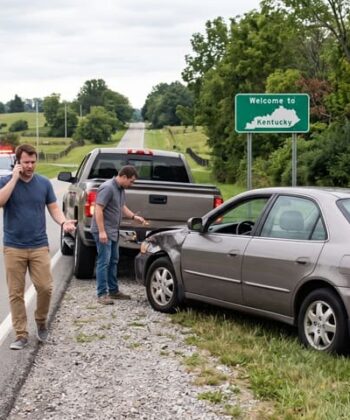
The more detail you capture at the scene, or as soon as it’s safe to do so, the easier it is for an attorney to reconstruct what happened. Photograph the vehicles’ positions, the damage, nearby signs and traffic controls, road and weather conditions, and any visible injuries, from multiple angles. This evidence is often irreplaceable, since vehicles get repaired and conditions change within hours.
- Names and contact details of everyone involved
- Contact information and statements from any witnesses
- The police report and the responding officer’s name and badge number
- The precise time, date, and location of the accident
A complete file of documents, photos, and witness information gives a claim credibility that’s harder for an adjuster or defense attorney to chip away at later.
Consult a Legal Professional Before You Talk to Anyone Else
Getting legal help early changes the trajectory of most accident claims. An experienced attorney helps you avoid early missteps, prepares documentation properly, and represents your interests in negotiations. Even an innocent remark made in the immediate aftermath can be used against a claim later, which is why professional guidance matters before issuing statements, responding to the other side, or accepting any settlement offer. According to research from the Insurance Research Council, based on closed-claim data from insurers representing more than half the U.S. auto market, claimants represented by an attorney receive settlements roughly 3.5 times larger on average than those who handle a claim alone — a gap wide enough to matter even after accounting for attorney fees.
Communicate Cautiously with Insurance Companies
Contact with insurers after an accident is close to inevitable, but claims adjusters work for a company whose interest is minimizing payouts. Their questions can be designed to elicit an admission of fault, downplay an injury, or nudge toward an early, undervalued settlement. Until you’ve spoken with a lawyer, keep communications with insurers brief and factual — avoid recorded statements, speculation about the cause of the crash, or minimizing your own symptoms. If an insurer pressures you to sign something or answer detailed questions right away, it’s reasonable to ask for time to talk to your attorney first.
Be Mindful of Social Media Activity
Insurance companies and opposing legal teams routinely search social media for posts, photos, or check-ins that might contradict an official statement or suggest an injury is less serious than claimed. Even an ordinary post — a vacation photo, a comment about your day, a gym check-in — can be taken out of context. Tightening privacy settings and asking friends and family not to tag you or post about the incident is a simple, low-cost precaution while a claim is pending.
Understand Your State’s Legal Timeframes
A statute of limitations governs personal injury claims—a strict filing deadline that varies by state —and missing it, even unintentionally, generally means losing the right to pursue compensation, no matter how strong the underlying case is. Deadlines commonly run two to four years from the date of the accident depending on the state, though some states allow as little as one year and others considerably longer. An attorney can confirm the exact deadline that applies and make sure the necessary paperwork is filed correctly and on time — acting early also helps preserve evidence and witness memory before either one fades.
A Case That Shows Why This Matters
The following is drawn from a published case result, with identifying details removed to protect client privacy.
A woman suffered severe injuries when a drunk driver crossed the center line and struck her vehicle head-on. The firm handling the claim, Metzger Wickersham, built the civil case around thorough documentation of the collision and the client’s injuries, ultimately recovering $1.5 million on her behalf, as reflected in the firm’s published case results. Cases involving an impaired driver often move on two tracks — a criminal case brought by the state, and a separate civil claim for the victim’s damages — and the documentation habits described above are exactly what makes the civil side of a case like this one hold up.
Past results depend on the specific facts of each case and do not guarantee or predict a similar outcome in any other matter.
Conclusion
Every step taken after an accident shapes both recovery and the strength of a legal claim. Prompt medical care, thorough documentation, and early legal consultation are among the most effective ways to protect your interests. Careful communication with insurers and restraint on social media round out the basics that keep a claim from being undermined by something avoidable. For a closer look at how these first steps play out in specific situations, see this guide to the first 24 hours after a rideshare crash and this overview of protecting your rights after an accident in Arkansas.
Authorities & Sources
Disclaimer
This article is provided for general informational purposes only and does not constitute legal advice. Statutes of limitations, evidentiary rules, and insurance practices vary by state and change over time. Reading this article does not create an attorney-client relationship. Anyone involved in an accident should consult a licensed attorney in their state promptly to understand the specific facts and deadlines that apply to their situation.