

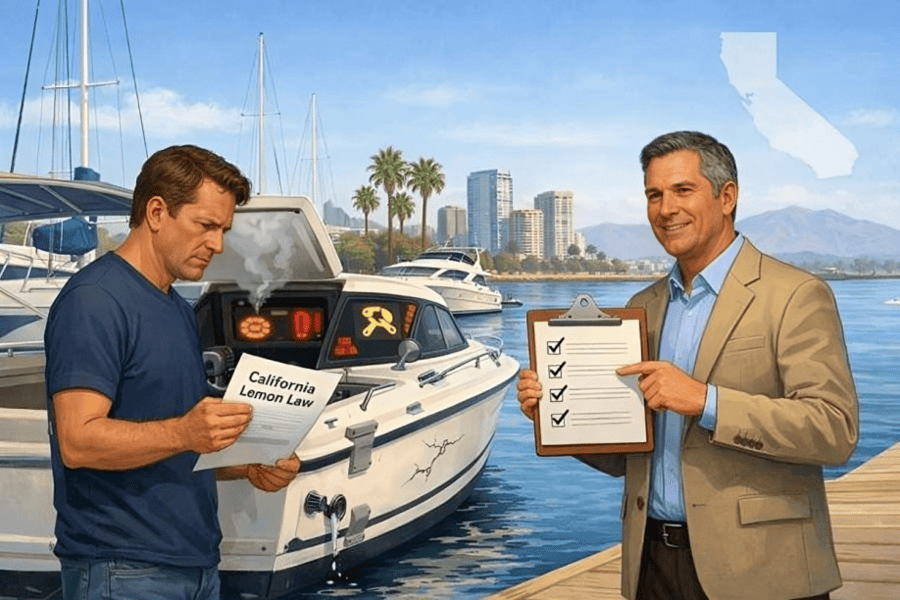
Lemon laws stand as a critical safeguard for consumers who purchase defective products. In California, these statutes provide robust protections for buyers of both vehicles and watercraft. At their core, lemon laws are designed to ensure that individuals who invest their hard-earned money into a major purchase—such as a boat, yacht, or jet ski—are entitled to a product that meets reasonable standards of quality and performance. The California boat lemon law specifically addresses the rights of boat owners who encounter persistent issues with new or warranted watercraft that a manufacturer or dealer cannot successfully repair after a reasonable number of attempts.
The essential purpose of the boat lemon law is to prevent undue financial loss and preserve consumer rights should a manufacturer fail to remedy material defects. A boat is considered a “lemon” when repeated repair attempts fail to resolve a significant problem that impairs the use, value, or safety of the vessel. If these conditions are met, the boat owner may pursue a lemon law claim seeking a refund, replacement, and even reimbursement for incidental and consequential damages, including attorney’s fees. The buyer relied on the California lemon law for boats to seek a refund after repeated mechanical failures made the vessel unsafe to operate.
Overview of California’s Consumer Protection Laws
California has long held a reputation as a leader in consumer protection, and its framework for defective boats is no exception. The Song-Beverly Consumer Warranty Act, commonly referred to as the California Lemon Law, outlines the legal rights of consumers—including boat owners—when dealing with a defective boat still covered under manufacturer warranty. The statute mandates that if a boat, purchased primarily for personal, family, or household purposes, experiences material defects during the warranty period, the manufacturer is legally obligated to repair those defects within a reasonable period.
Under the California lemon law, a consumer who purchases a vessel such as a yacht from manufacturers like Silverton Marine Corp., a fishing boat from Alumacraft Boat Co., or a jet ski from Yamaha or Sea-Doo, has the right to expect their watercraft to be seaworthy and safe. If repeated repair attempts during the warranty period fail, or if the vessel spends significant time being repaired, the owner may have the right to seek replacement, refund, or other remedies.
Importantly, California’s laws include clarifications regarding what qualifies as “reasonable repair attempts,” which is crucial in lemon law claims. The legal system in California also allows for reimbursement of costs such as collateral charges, repair costs, attorney’s fees, and incidental damages—making it one of the most consumer-friendly jurisdictions in the nation.
Boat Lemon Law vs. Car Lemon Law: Key Differences
Though both laws provide similar protections, the boat lemon law in California has distinct nuances compared to its automobile counterpart. Lemon law California statutes for vehicles have more well-established judicial interpretations, given their longer history and higher volume of claims. However, the principles remain consistent across both domains—if a manufacturer cannot resolve a substantial impairment to use, value, or safety after a reasonable number of repair attempts, the buyer is entitled to legal recourse.
One notable difference is that boats, due to their unique design and purpose, may face defects of a different nature than cars. For instance, defects may range from engine failure, navigation system malfunctions, or faulty communication system—any of which can pose a serious safety hazard or even leave the boat owner stranded at sea. Unlike cars, which might simply break down roadside, these defective aspects in boats can escalate risks significantly.
Additionally, certain exclusions apply more often to boats than to automobiles. For example, the business use exclusion may limit the California boat lemon law protections for commercial or business-operated vessels, focusing on consumer protection principally for personal, family, or household use cases.
What Qualifies as a Defective Boat in California?
Not all complaints rise to the level of a lemon law claim. For a boat to be considered a “lemon” under California law, it must exhibit a material defect that substantially impairs its use, value, or safety. Common examples include persistent engine issues (such as with Mercury Marine, Yamaha, Evinrude, Volvo-Penta Engines, or PCM Marine Engines), recurring hull leaks, defective electrical or navigation systems (from brands like Minn Kota Motors or Blue Sea Systems), and consistent mechanical breakdowns.
A material defect is more than a minor annoyance—it must significantly affect your ability to use the watercraft, impact its resale value, or create a potential safety hazard on the water. For instance, if a yacht from Hunter Marine Corp. or Jeanneau repeatedly fails at sea, leaving passengers stranded or posing a safety risk, this likely meets the substantial impairment criteria.
Proving your case involves solid record keeping—documentation such as repair records, surveys from a qualified expert or licensed mechanic, and purchase paperwork (bill of sale, sales receipt) are crucial. The defect must not be the result of accident or misuse, and the issue must have arisen and been reported within the warranty period provided by the manufacturer.
Additionally, California lemon law dictates that manufacturers must be given reasonable repair attempts. If, after a reasonable number of attempts (which is determined on a case-by-case basis and depends on the severity and frequency of the problem), the dealer or manufacturer cannot resolve the issue, the boat owner may demand a replacement, refund, or damages.
Types of Boats Covered Under California Lemon Law
The range of watercraft covered under the California boat lemon law is broad, extending well beyond just traditional vessels. In general, the law applies to new boats and certain used boats still under active manufacturer warranty, including:
- Pontoon Boats—often used for leisure or fishing
- Fishing Boats—from brands such as Alumacraft Boat Co. and Four Winns
- Yachts and Sail Boats—manufactured by Catalina Yachts, Beneteau, MacGregor, Fairline, Navigator, and Spirit Yachts
- Speed Boats and Catamarans—including high-performance watercraft like those from Force Boats and Lagoon
- Recreational Watercraft and Jet Skis—by manufacturers such as Sea-Doo, Yamaha, Bombardier Recreational Products, and Kawasaki
It’s important to note that eligibility under the lemon law California statute generally arises when boats and watercraft are purchased primarily for personal, family, or household purposes. Business use may exclude a vessel from certain lemon law protections, so clarity in documentation and the intended use is essential if you plan to initiate legal action.
Both engines and major onboard systems—manufactured by companies such as Crusader Marine Engine Co., Blue Sea Systems, and Minn Kota Motors—are included in the manufacturer warranty claims. A defective vessel with persistent problems in these components is often eligible either for a refund, replacement, or coverage of repair costs under the California boat lemon law.
In summary, the California boat lemon law affords comprehensive consumer protection for boat owners who have unwittingly purchased defective boats or lemon boats. Understanding your legal rights, leveraging documentation, and working with a legal expert or lemon law lawyer—such as at the Law Offices of Douglas D. Law, Esq., Doug D. Law, or McMillan Law Group—can help navigate the complexities, pursue expert legal support, and maximize your chances of success for a lemon law claim. If you believe you have a claim, consider seeking a free consultation or a case review; by doing so, you can protect your investment, seek reimbursement for undue losses, and ensure manufacturers uphold their obligations to California consumers.
Common Boat Defects and Issues Faced by Buyers
Boat owners in California are increasingly vigilant about quality when investing in boats and watercraft, whether it’s a new vessel or a used boat. Unfortunately, issues can arise from manufacturing, design flaws, or negligent repairs. These defects often trigger the protections of the california boat lemon law, making it vital to know what problems most frequently cause headaches for consumers.
Engine and Powertrain Failures
A large percentage of lemon law claims in California boat lemon law cases involve engine failure. Malfunctions with Minn Kota Motors, Mercury Marine engines, or Volvo-Penta Engines may result in substantial impairment to the use, value, or safety of yachts, sail boats, or fishing boats. Engine-related material defects may leave the vessel stranded at sea—an obvious safety hazard.
Electrical and Navigation Problems
Issues with navigation systems, communication systems, or batteries (such as those sourced from Blue Sea Systems) are common among new and used boats alike. These defective aspects not only impact safety, but also undermine a boat’s use and resale value. In some instances, such as with recreational watercraft like jet skis or catamarans, electrical failures risk significant time being repaired and jeopardize the owner’s financial investment.
Structural Integrity and Seaworthiness
Defective hulls, decks, and bulkheads are serious concerns, particularly for high-end models from Spirit Yachts, Force Boats, and Beneteau. Any compromise in seaworthy construction may constitute a material defect—directly relevant under lemon law California. Pontoon boats and speed boats are not immune: stress cracks, leaks, poor laminate bonding, and structural failures may all form the basis of a lemon law claim or initiate legal action.