
By Jay Solnick, Esq., Founding Partner, Solnick Lawyers
Updated September 2026 · 7 min read
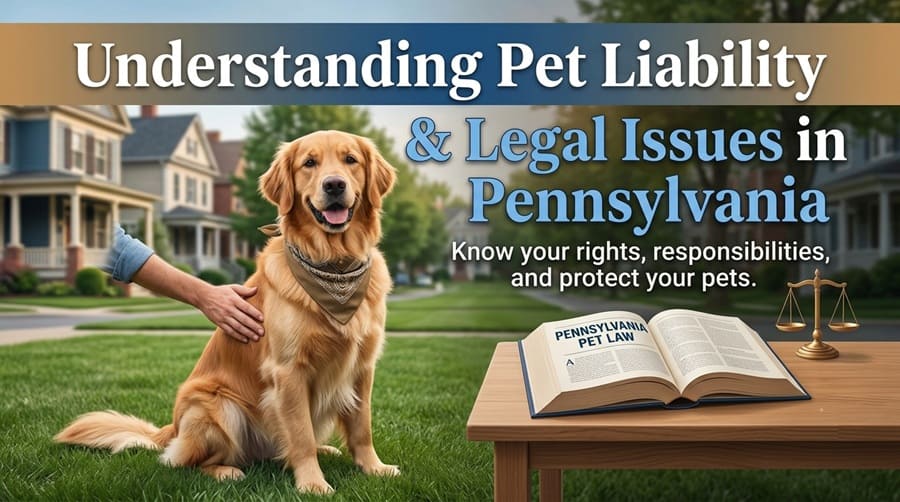
Pennsylvania dog owners are automatically on the hook for a bite victim’s medical bills the moment their dog breaks skin — no history of aggression required. That single rule, buried in the state’s Dog Law, catches a lot of pet owners off guard, and it’s the starting point for nearly everything else owners and victims need to know about pet liability in Pennsylvania.
Every pet owner carries legal responsibility for the animals in their care — not just for bites, but for property damage, injuries to other animals, and incidents involving pets that wander off their property. Pennsylvania, like most states, holds owners accountable when their animals cause harm, and the rules get more demanding as the severity of an incident increases.
Pennsylvania’s Pet Liability Laws
Pennsylvania’s Dog Law establishes strict liability for one specific category of harm: medical expenses. Under 3 P.S. § 459-502(b)(1), a dog owner is automatically responsible for a bite victim’s medical costs, regardless of whether the owner knew the dog had ever shown aggression before. A victim doesn’t need to prove the owner was careless — the bite itself triggers the obligation.
That strict standard has a limit, though: it covers medical bills only. Pennsylvania doesn’t follow the “one-bite rule” that some states use, but it isn’t a pure strict-liability state either — it’s a hybrid. To recover damages beyond medical expenses, such as lost wages, pain and suffering, or scarring, a victim generally has to show that the owner knew, or should have known, that the dog had dangerous tendencies. A documented prior bite, reported growling incidents, or aggressive behavior toward other animals can all serve as that evidence.
Local leash and confinement ordinances add another layer, and they vary from county to county and municipality to municipality within Pennsylvania. An owner who lets a dog off-leash in violation of a local ordinance is generally exposed to negligence liability if that dog then bites or injures someone.
Legal Issues That Can Arise Due to Pets
Owning a pet brings joy but also legal responsibilities. Pets can cause various legal issues, and the most common situations in which owners may find themselves liable include property damage, bites, injuries to other animals, and trespassing.
Property Damage
Pets can damage property in ways that range from chewed furniture to torn-up gardens to punctured window screens. Pennsylvania pet owners can be held financially responsible for this kind of damage, which may mean compensating a landlord, neighbor, or property owner directly.
Bites
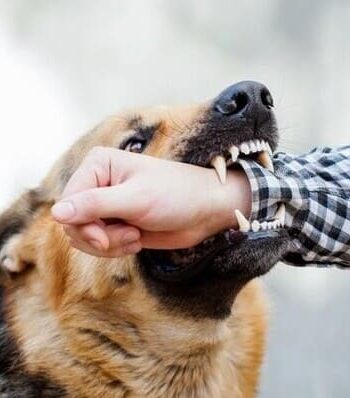
Dog bites are the most litigated pet liability issue by a wide margin. Nationally, dogs bite an estimated 4.5 million people every year, and roughly one in five of those bites is serious enough to require medical treatment, according to the American Veterinary Medical Association. In Pennsylvania, an owner faces strict liability for medical costs even if the dog has never shown aggression before. If the dog’s aggressive tendencies were already known, the owner can also be liable for additional damages under a negligence theory.
Trespassing
When a pet wanders onto a neighboring property, the owner can be held accountable for any damage or injury that results — to people, pets, or property. Keeping animals reliably confined is one of the simplest ways to avoid this kind of exposure.
Injuring Other Animals
If a pet injures another animal, the owner may be liable for veterinary costs, even if the pet has no history of aggression. This is one of the more overlooked forms of pet liability, which makes proper socialization and supervised introductions between animals worth taking seriously.
A Look at How These Cases Play Out
A fact pattern like this one comes up often enough that it’s worth walking through: a homeowner’s dog, well known to the family and with no prior bite history, gets loose from a backyard fence and bites a delivery driver on the leg. The owner initially assumes there’s no liability, since the dog had never bitten anyone before.
Because the bite broke the skin, Pennsylvania’s strict liability rule under 3 P.S. § 459-502(b)(1) applies automatically. Because Pennsylvania law places responsibility for the victim’s medical treatment costs on the dog’s owner or keeper, those expenses may be recoverable from the responsible party. Whether a homeowner’s or renter’s insurance policy provides coverage is a separate insurance question that depends on the policy and circumstances. When an investigation turns up a prior animal-control complaint about the same dog escaping the yard, that additional fact can support a negligence claim for the driver’s lost wages and pain and suffering, on top of the medical expenses already owed. A claim may be resolved through negotiations with the insurer without the parties filing a lawsuit, although the appropriate approach depends on the facts and the parties’ positions.
This example reflects a pattern seen across dog bite matters generally; details have been generalized to protect client confidentiality. Every case turns on its own facts, and past results don’t guarantee a similar outcome in a different case.
How Pennsylvania Determines Pet Liability
Pet liability in Pennsylvania comes down to a combination of state and local law, the specific facts of the incident, and the owner’s actions — or failure to act. Two legal concepts do most of the work: strict liability and negligence.
Under strict liability, an owner is automatically responsible for a bite victim’s medical bills, whether or not the dog had ever shown aggressive tendencies before. Negligence is what determines everything else — pain and suffering, lost wages, and similar damages. An owner who violates a local leash law, or who fails to properly train or restrain a dog with known behavioral issues, is more likely to be found negligent, which increases their exposure.
Whether the injured party was lawfully present also matters. Someone trespassing or provoking a dog may find that this reduces or eliminates the owner’s liability, depending on the circumstances. But a dog that attacks someone lawfully on the property, or in a public space, still exposes the owner to liability for the resulting harm.
When to Speak With an Attorney — and How Much Time You Have
If a pet has caused you injury or property damage, an attorney can help you navigate insurance claims and, if necessary, a lawsuit. For victims, that includes making sure medical bills, lost wages, pain and suffering, and emotional distress are all properly accounted for in any settlement.
It’s especially important to involve an attorney when there’s a factual dispute — for example, over whether the injured party was trespassing, or whether the dog had shown aggressive tendencies in the past. A skilled lawyer can gather evidence, negotiate with the opposing party or their insurer, and represent your interests in court if the case doesn’t settle.
Timing matters, too. Pennsylvania law gives injury victims a limited window to file suit: personal injury claims, including dog bite cases, generally must be filed within two years of the incident under 42 Pa.C.S. § 5524. Waiting to consult an attorney doesn’t just risk losing evidence and witness memory — it can eliminate your right to recover anything at all if the deadline passes.
If You’ve Been Hurt by a Dog Bite or Other Pet Injury
Suffering from a dog bite attack or other pet-related injury can be both physically and emotionally debilitating. Medical bills, missed work, and lasting pain and suffering are a lot to manage on your own, and Pennsylvania law gives injured victims real options for recovering those costs — through the strict liability rule for medical expenses and, where applicable, a negligence claim for everything else.
If you were injured by a dog in Pennsylvania, consider speaking with a Pennsylvania experienced dog attack lawyer about the facts of the incident, available evidence, applicable liability rules, and the deadline for filing a claim.