

By Robert Southwell, Esq. — Oregon State Bar #180920, Former Prosecutor, Southwell Law, LLC, Salem, OR
Last reviewed: September 2026
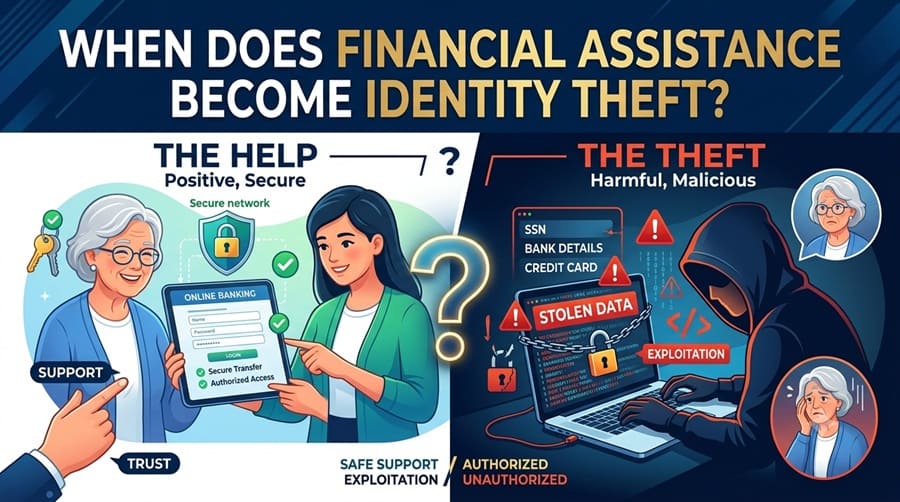
Plenty of Oregon families run their finances informally. An adult child manages a parent’s bills after a health scare. A spouse uses the other’s card because it is the one in the drawer. Someone covers a sibling’s rent and reimburses themselves later from an account they were given access to.
These arrangements usually work. When they stop working, which often happens when a relationship deteriorates or a relative dies, the same conduct can arrive at a police station described very differently.
What Oregon Law Actually Says
Under ORS 165.800, a person commits identity theft if, with intent to deceive or defraud, they obtain, possess, transfer, create, utter, or convert to their own use the personal identification of another person. It is a Class C felony, and unlike some states Oregon does not scale the charge to the amount of money involved. The statutory maximum for a Class C felony in Oregon is five years in prison and a fine of up to $125,000.
Two features of that definition surprise people. First, no money needs to change hands — possession with the required intent is enough. Second, personal identification is defined very broadly, covering a name, date of birth, Social Security number, driver’s license number, bank or credit card account numbers, a signature, an email address or account, and a personal identification number, among other things.
So the raw conduct in most family financial arrangements — holding someone else’s card, knowing their account number, signing their name, using their online banking login — falls within the statutory language on its face. What keeps ordinary helpfulness from being a felony is the rest of the definition.
The Two Questions That Decide These Cases
Authorization comes first. Did the account holder consent to what was done, and to that specific use? Consent to pay the electricity bill is not consent to withdraw cash, and consent given in March may not cover a transaction in November. A power of attorney grants defined authority, and acting outside its scope is where many of these cases begin — though it is worth noting that Oregon’s Court of Appeals has held the opposite conduct isn’t automatically identity theft either: in State v. Zibulsky, 266 Or App 633 (2014), an agent who withdrew funds using access credentials the account holder had given her, as her power of attorney, was found not to have committed identity theft — because she used her own access credentials, not “the personal identification of another person” as the statute requires. The authorization question and the identity-theft question are related but not identical.
Intent comes second, and it is usually the real battleground. Oregon’s Court of Appeals has read intent to deceive as an attempt to obtain a benefit the person was not lawfully entitled to (State v. Porter, 198 Or App 274 (2005)), and intent to defraud as an intent to injure another person’s legal rights or interests (State v. Alvarez-Amador, 235 Or App 402 (2010)). Someone who genuinely believed they were authorized, even mistakenly, is in a different position from someone who concealed transactions.
That distinction sounds clean on paper. In practice it turns on evidence: text messages, the pattern of transactions, whether anything was concealed, and how the accused explained things when first asked.
Where Informal Arrangements Go Wrong
Some recurring situations: An adult child with access to an aging parent’s accounts pays themselves for caregiving without a written agreement, and a sibling later calls it theft. A separating couple keeps using shared cards after the relationship ends and one of them reports it. Someone with a power of attorney treats it as ownership of the funds rather than authority to manage them. A relative opens a line of credit in a family member’s name intending to pay it off, and does not.
Oregon does recognize narrow affirmative defenses to identity theft, but they concern underage use of another person’s identification to buy alcohol or tobacco or to enter an age-restricted venue. They do not cover family financial arrangements.
A Case That Turned on a Text Message
The following is a composite illustration based on the type of matter Southwell Law commonly encounters. Identifying details have been altered to protect confidentiality.
A woman had been managing her elderly father’s bills for roughly two years after his stroke, periodically reimbursing herself from his checking account for groceries and prescriptions she had covered out of pocket. After her father died, a sibling reviewing the estate flagged those reimbursements to the district attorney’s office as unauthorized withdrawals. The turning point was a string of text messages in which the father had told her, in his own words, to “just take it back out, don’t worry about asking every time.” That record went directly to both authorization and intent — the two elements the state would have had to prove beyond a reasonable doubt — and the prosecutor’s office ultimately declined to pursue charges. It’s a reminder that in these cases, a text thread or a witnessed conversation can be the difference between a family arrangement and a felony charge.
When the Charge Becomes More Serious
Under ORS 165.803, certain circumstances elevate the offense to aggravated identity theft, a Class B felony carrying up to 10 years in prison and a fine of up to $250,000. It applies where a person violates the identity theft statute in ten or more separate incidents within a hundred and eighty days, where losses reach ten thousand dollars in a single or aggregate transaction within that period, where they hold ten or more pieces of identification belonging to ten or more people, or where they have a prior conviction for the offense.
A months-long series of small withdrawals from a relative’s account can therefore be charged far more seriously than the individual amounts suggest — ten modest reimbursements over six months is enough to trigger the ten-incidents threshold on its own, independent of the dollar total.
If You Have Been Contacted About This
People accused in these situations usually want to explain, because they believe the explanation is obvious and exculpatory. Explaining to a detective without counsel is rarely as helpful as it feels, and early statements tend to shape everything afterward. An identity theft lawyer can assess where the authorization and intent questions actually fall in a given case before anything is said on the record.
Authorities & Sources
- ORS 165.800 — Identity theft
- ORS 165.803 — Aggravated identity theft
- State v. Porter, 198 Or App 274, 108 P3d 107 (2005) — defining “intent to deceive”
- State v. Alvarez-Amador, 235 Or App 402, 232 P3d 989 (2010) — defining “intent to defraud”
- State v. Zibulsky, 266 Or App 633, 338 P3d 750 (2014) — power of attorney and own access credentials