
By Robert David Malove, Board Certified in Criminal Trial Law, Law Offices of Robert David Malove · Fort Lauderdale, Florida | Last reviewed: October 2026
Most people charged with DUI have never been through the criminal system before. The arrest happens in an hour, but the case that follows can take months, and some of the most important decisions have to be made in the first ten days. Knowing what a DUI defense actually involves makes it easier to ask good questions, evaluate a lawyer, and set realistic expectations.
Two Cases From One Arrest
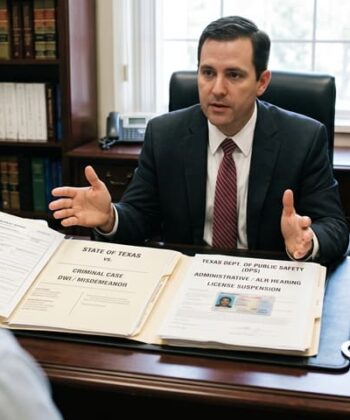
A Florida DUI arrest starts two separate proceedings that move on different tracks.
| Criminal case | Administrative license case | |
| Where it happens | County court | Florida Department of Highway Safety and Motor Vehicles (FLHSMV) |
| What is decided | Guilt and sentence under § 316.193 | Whether the license suspension stands under § 322.2615 |
| Key deadline | Court dates set by the clerk | 10 days from arrest to request review or a hardship option |
| Outcome affects | Fines, jail, probation, conviction record | Your ability to drive in the meantime |
Winning one does not automatically win the other, which is why both need attention from the start.
The 10-Day Deadline Comes First
Under Fla. Stat. § 322.2615, a driver who is arrested for DUI and either fails or refuses a breath or urine test has their license suspended on the spot. The officer’s citation serves as a temporary permit for ten days. Within those ten days, the driver must either request a formal review hearing to challenge the suspension or, for many first-time offenders, waive the review and apply for a hardship license, which usually requires enrolling in DUI school. Suspensions run six months for a test result of 0.08 or higher and one year for a first refusal.
Because this deadline runs from the date of arrest, not the first court date, it is often the first thing a defense lawyer handles.
Examining the Traffic Stop
An officer needs a lawful reason to stop a vehicle, such as a traffic violation or reasonable suspicion of impairment. If the stop was not justified, evidence gathered afterward, including field sobriety and breath test results, can be challenged in a motion to suppress. The defense compares the police report with dash camera and body camera video, because the reason for the stop is sometimes clearer, or weaker, on video than on paper.
Scrutinizing Field Sobriety Exercises
The standard roadside tests are horizontal gaze nystagmus, the walk-and-turn, and the one-leg stand. They are supposed to be given and scored according to NHTSA standards. Many factors other than alcohol affect performance, including nerves, fatigue, age, weight, footwear, injuries, and uneven roads. A defense looks at whether the instructions were given correctly, whether the conditions were fair, and whether the video matches the officer’s description.
Reviewing the Breath or Blood Test
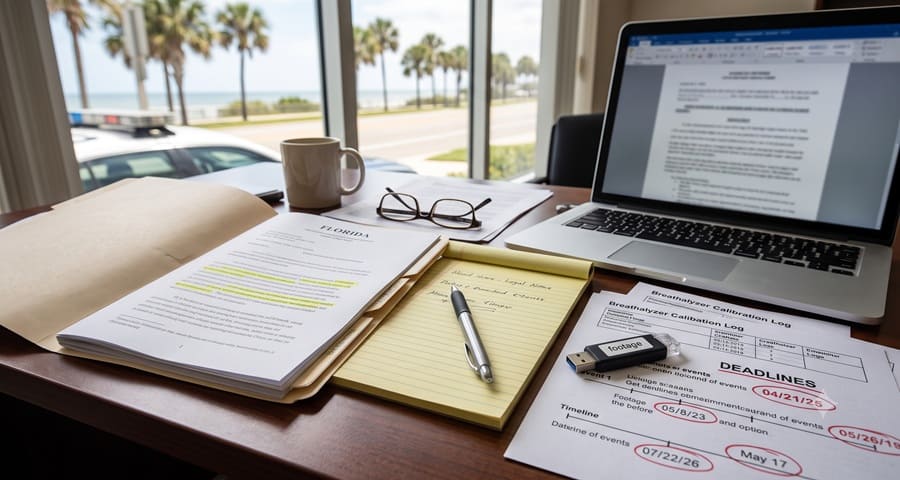
Florida’s legal limit is 0.08 under § 316.193, and a result of 0.15 or higher brings enhanced penalties. Breath testing in Florida is regulated by the Florida Department of Law Enforcement under Rule Chapter 11D-8 of the Florida Administrative Code. Those rules govern instrument inspections, operator certification, and the 20-minute observation period before a breath sample. Records showing a missed inspection, an expired operator permit, or a broken observation period can undermine the result. Blood tests raise separate questions about how the sample was drawn, stored, and analyzed.
Refusal Is Now a Crime on the First Offense
Florida changed its refusal law in 2025. Under § 316.1939, as amended, refusing a lawfully requested breath or urine test after a DUI arrest is a second-degree misdemeanor even for a first refusal, provided the officer gave the required warnings. It is a first-degree misdemeanor for someone with a prior suspension for refusal. This is in addition to the one-year license suspension. Because the crime depends on the warnings given and the lawfulness of the arrest, those details matter more than ever. Findattorneys.org’s overview of Florida traffic safety laws covers the wider policy debate.
Possible Penalties for a First DUI
| BAC under 0.15 | BAC 0.15+ or minor in vehicle | |
| Fine | $500 to $1,000 | $1,000 to $2,000 |
| Jail | Up to 6 months | Up to 9 months |
| License revocation | 180 days to 1 year | 180 days to 1 year |
| Ignition interlock | At the court’s discretion | Required for at least 6 months |
| Other | 50 hours of community service, probation up to 1 year, DUI school, vehicle impoundment | Same |
Florida does not allow a “withhold of adjudication” for DUI under § 316.656, so a DUI conviction stays on the record and cannot later be sealed. That is one reason resolving the case as reckless driving, sometimes called a “wet reckless,” can be significant.
Working Toward a Resolution
Once the evidence has been reviewed, a DUI case usually ends in one of three ways: dismissal if key evidence is suppressed or the state cannot prove its case; a negotiated plea to a lesser charge such as reckless driving; or trial. The right path depends on the specific weaknesses in the stop, the roadside exercises, and the chemical test. Experienced DUI defense lawyers in Key West and elsewhere in Florida generally build that assessment from the video and testing records rather than from the arrest report alone.
Findattorneys.org’s article on whether you need a lawyer for a first-time DUI discusses how first offenders typically approach that decision.
Why the Stakes Are High
A DUI conviction can affect employment, insurance, professional licenses, and immigration status for years. The laws are strict for a reason: the National Highway Traffic Safety Administration reports that alcohol-impaired crashes kill thousands of people in the U.S. every year. That context is also why a thorough defense matters, so the outcome rests on reliable evidence.
Frequently Asked Questions
How long do I have to save my license after a Florida DUI arrest?
Ten days from the arrest to request a formal review hearing or apply for a hardship option.
Is refusing a breath test a crime in Florida?
Yes. Since the 2025 amendments, a first refusal after proper warnings is a second-degree misdemeanor, in addition to a one-year suspension.
Can a Florida DUI be sealed or expunged?
No. Florida does not allow a withholding of adjudication for DUI, so a DUI conviction cannot be sealed. A reduced charge may have different options.
What is the legal limit in Florida?
A breath or blood alcohol level of 0.08, with enhanced penalties at 0.15 or higher.
Disclaimer
This article provides general information about DUI defense in Florida. It is not legal advice, and reading it does not create an attorney-client relationship. Florida DUI laws and penalties change, and every case depends on its own facts. Anyone arrested for DUI should speak promptly with a licensed Florida criminal defense attorney.