
By Tad A. Nelson, Board Certified in Criminal Law, Tad Nelson & Associates | Last reviewed: October 2026
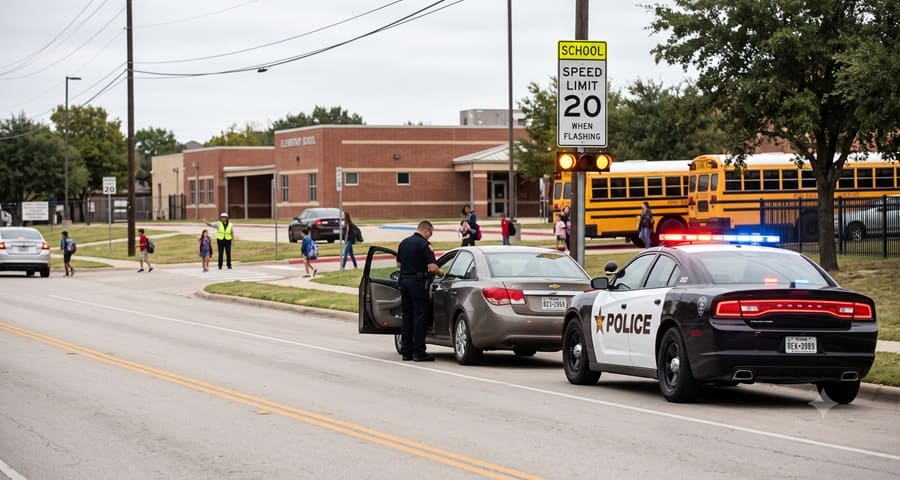
Two drivers in Harris County are each arrested for a first DWI on the same weekday afternoon. Neither has a record, neither caused a crash, and both test at 0.10. One was stopped on a frontage road. The other was stopped a few hundred feet away, inside a school crossing zone while the yellow lights were flashing.
Since September 1, 2025, the first driver faces a Class B misdemeanor. The second faces a state jail felony.
| First DWI, no prior record | Offense level | Range of punishment |
| Basic DWI | Class B misdemeanor | 72 hours to 180 days in jail; fine up to $2,000 |
| Open container in reach | Class B misdemeanor | Minimum rises to 6 days |
| Alcohol concentration of 0.15 or more | Class A misdemeanor | Up to 1 year in jail; fine up to $4,000 |
| Passenger younger than 15 (§ 49.045) | State jail felony | 180 days to 2 years; fine up to $10,000 |
| In an active school crossing zone (§ 49.04(e)) | State jail felony | 180 days to 2 years; fine up to $10,000 |
What Senate Bill 826 Changed
Senate Bill 826 passed in the 2025 regular session (Acts 2025, 89th Leg., ch. 991) and added subsection (e) to Texas Penal Code § 49.04. It says that if it is shown at trial that the person “was operating the motor vehicle in a school crossing zone during the time the reduced speed limit applies to the zone,” the DWI is a state jail felony.
The enhancement does not require a crash, an injury, or a child in the car. The only added facts are where the vehicle was and when.
The law applies only to offenses committed on or after September 1, 2025. If any element of the offense happened before that date, the old law governs, even if the case is tried later.
The Underlying DWI Still Has to Be Proven
Section 49.04 makes it an offense to operate a motor vehicle in a public place while intoxicated. Texas defines intoxication two ways: an alcohol concentration of 0.08 or more, or the loss of normal use of mental or physical faculties because of alcohol, drugs, or another substance.
That second definition matters here. The school-zone enhancement can apply even without a 0.08 test result if the state proves intoxication through driving behavior, field sobriety tests, video, or drug evidence. The reverse is also true: driving through an active school zone does not prove intoxication. The enhancement raises the level of a proven DWI. It does not replace any element of it.
“Near a School” Is Not the Test
The statute borrows its definition from Transportation Code § 541.302. A school crossing zone is a reduced-speed zone that a local authority designates on a street to help children safely cross on their way to or from a public or private elementary or secondary school.
That definition, plus the timing requirement, creates questions that rarely mattered in a DWI case before:
- Was the zone legally designated? The designation comes from a city or county ordinance or order, not from a sign alone.
- Where exactly are its boundaries? The point of the stop or the point of observed driving has to be inside them.
- Was the reduced limit in effect? Most zones apply only at set times, often marked by flashing beacons or posted hours on school days.
- Was the vehicle being operated in the zone, not just stopped or arrested there after driving elsewhere?
Proof of these facts usually comes from the local designation records, school calendars and beacon schedules, dash and body camera video, GPS or computer-aided dispatch data, and the officer’s testimony. A defense review now has to look at all of that alongside the usual questions about the stop, the field sobriety tests, and the breath or blood evidence.
Different From DWI With a Child Passenger
Texas already had a felony for DWI with a passenger younger than 15 under § 49.045. That offense depends on who is in the car. The new school-zone rule depends on where the car is. A driver alone can now face a state jail felony, and the two enhancements are proven with completely different evidence.
What a State Jail Felony Means
Under Penal Code § 12.35, a state jail felony carries 180 days to two years in a state jail facility and a fine of up to $10,000. That compares with a maximum of 180 days for a Class B misdemeanor and one year for a Class A.
Two points often get lost:
- Reduction to a misdemeanor. Under § 12.44, a judge may punish a state jail felony as a Class A misdemeanor if that would serve the ends of justice, and a prosecutor can agree to proceed on the misdemeanor level. That makes the school-zone allegation a central point in plea negotiations.
- Collateral consequences. A felony conviction can affect employment, professional licenses, firearm rights, immigration status, and the way any future offense is charged.
Because so much now turns on location and timing, the zone itself has become a contested issue rather than a background detail. For drivers in the Houston area researching a Tad Nelson Houston DWI attorney or any other defense counsel, the first questions should include where the stop happened, what time it was, and whether the school day was in session.
A Galveston County Felony DWI Reduced to a Misdemeanor
Tad Nelson & Associates’ published results include a first-offense DWI with a child passenger in Galveston County that was charged as a felony and reduced to a misdemeanor. The listing does not give the year or the specific grounds for the reduction, and the case predates SB 826.
It is the closest parallel in the firm’s results to the new school-zone offense. Both are first-offense DWIs that become state jail felonies because of one added fact. In both, the defense can focus on that added fact as well as the underlying DWI, and a reduction to the misdemeanor level can change the long-term consequences dramatically.
Past results do not guarantee a similar outcome in any other case. Every case depends on its own facts, evidence, and law.
Know the Exact Charge
People often describe their case as “a first DWI” without knowing which subsection is charged. After SB 826, two people with the same arrest story can face different offense levels. FindAttorneys.org’s guide to preparing for a first meeting with a Texas defense attorney recommends confirming the exact charge and statute number before the consultation. For a DWI, check whether the charging document cites § 49.04(e), § 49.045, or § 49.04(d).
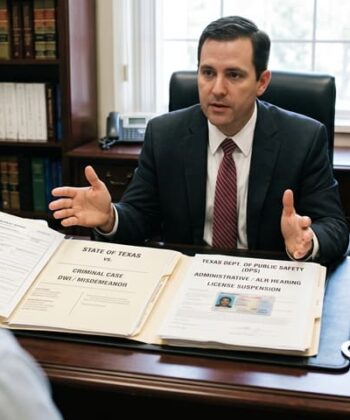
Remember too that a DWI arrest usually starts a separate driver’s license case through the Department of Public Safety, with a 15-day deadline to request a hearing. That deadline runs regardless of how the criminal charge is classified.
Frequently Asked Questions
Is a first DWI in a Texas school zone a felony?
Yes, for offenses on or after September 1, 2025, if the state proves the driver was operating in a designated school crossing zone while the reduced speed limit applied. Otherwise, a first DWI is generally a Class B misdemeanor.
Does a child need to be present for the school-zone felony?
No. The enhancement is based on location and time, not on any child being in the car or nearby.
What if the school-zone lights were not flashing?
The statute applies only “during the time the reduced speed limit applies to the zone.” If the reduced limit was not in effect, the school-zone enhancement should not apply, though the underlying DWI can still be prosecuted.
Can a school-zone DWI be reduced to a misdemeanor?
It can. Texas law allows a state jail felony to be punished as a Class A misdemeanor in some cases, and the charge can also be negotiated depending on the evidence.
Authorities & Sources
- Texas Penal Code § 49.04: Driving while intoxicated
- S.B. 826, 89th Leg., R.S. (2025): Enrolled text adding § 49.04(e)
- Texas Transportation Code § 541.302: Definition of school crossing zone
- Texas Penal Code §§ 12.35, 12.44: State jail felony punishment and reduction
Disclaimer
This article provides general information about Texas DWI law. It is not legal advice, and reading it does not create an attorney-client relationship. The school-zone provision is new, and courts have not yet interpreted many of its terms. Anyone charged with DWI in Texas should speak with a licensed Texas criminal defense attorney about their case.