

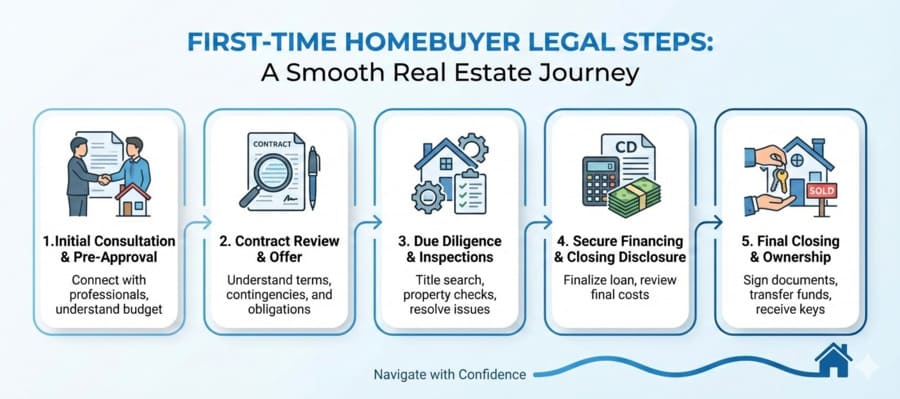
Key Takeaways
- Master the Contract: Understand that your offer becomes a legally binding contract the moment the seller signs it.
- Protect with Contingencies: Use legal “escape hatches” for inspections, financing, and appraisals to protect your deposit.
- Verify the Title: Ensure the property is free of “clouds” (liens or disputes) before you sign the deed.
- Review HOA Covenants: Research the legally binding rules (CC&Rs) that will govern how you can use your property.
- Consult a Professional: Know when an agent’s advice ends and where a real estate attorney’s expertise is required.
1. The Legal Weight of the Purchase Agreement
The most critical moment in your journey isn’t the house hunt—it’s the Purchase Agreement. This is a legally binding contract. Once both parties sign, you are obligated to perform under the terms listed.
- Earnest Money: Understand that your “good faith” deposit can be legally forfeited if you back out of the deal without a valid contractual reason.
- Deadlines: Legal contracts are time-sensitive. Missing a “time is of the essence” deadline can lead to a breach of contract.
Embarking on the journey to homeownership is both exciting and daunting for many new buyers. The process may seem overwhelming at first, but having an actionable plan makes all the difference. If you’re looking for trusted guidance as you take your first steps, consider working with Oviedo FL real estate agent Ross Janke, who can help simplify your path to homeownership. Understanding each phase of buying a home helps eliminate guesswork and increases confidence throughout your real estate journey.
2. Leverage Contingencies (Your Safety Net)
From a legal standpoint, contingencies are your best friends. They allow you to cancel the contract and keep your deposit if certain conditions aren’t met. Ensure your contract includes:
- Home Inspection Contingency: Gives you the right to renegotiate or walk away if structural issues are found.
- Financing Contingency: Protects you if your mortgage falls through at the last minute.
- Appraisal Contingency: Ensures you aren’t legally forced to pay more than the home’s fair market value.
3. Title Search and Insurance
You aren’t just buying a house; you’re buying the Title to the land. A title search is a legal deep dive to ensure the seller actually has the right to sell the home.
- Liens and Encumbrances: A title search uncovers unpaid taxes, contractor liens, or old mortgages.
- Title Insurance: Always purchase an Owner’s Policy. It provides a legal defense and financial protection if someone claims ownership of your home years after you’ve moved in.
4. Disclosures and “Caveat Emptor”
While many states have moved away from “buyer beware” (caveat emptor), the legal burden of discovery often still falls on you.
- Seller Disclosures: Review the Seller’s Disclosure Notice carefully. If a seller knowingly hides a material defect (like a leaky basement), this document is your primary evidence for a future legal claim.
- Lead-Paint & Environmental Hazards: Ensure you receive federally mandated disclosures if the home was built before 1978.
5. HOA and Zoning Restrictions
Before you buy, you must review the Covenants, Conditions, and Restrictions (CC&Rs).
- Binding Rules: When you buy in an HOA, you legally agree to its bylaws. This can include anything from what color you paint your door to whether you can park a work truck in your driveway.
- Zoning: If you plan to run a business from home or build an ADU (Accessory Dwelling Unit), verify that local zoning laws legally permit it.
6. The Closing: The Transfer of Rights
Closing (or “Escrow”) is the formal legal process of transferring the deed.
- The Deed: This is the legal document that transfers ownership. Ensure it is recorded correctly with the county.
- Closing Disclosure (CD): You are legally entitled to receive this document three days before closing. Compare it to your initial Loan Estimate to ensure no “junk fees” were added.