

Estonia has become one of the most attractive European jurisdictions for entrepreneurs who want to run an international business remotely. Thanks to its advanced digital infrastructure, streamlined government services, and transparent corporate system, forming a company in Estonia can often be completed faster than in many other EU countries.
However, foreign founders should understand that Estonian company formation comes with specific legal requirements, especially when it comes to having a registered legal address and, in some cases, a contact person.
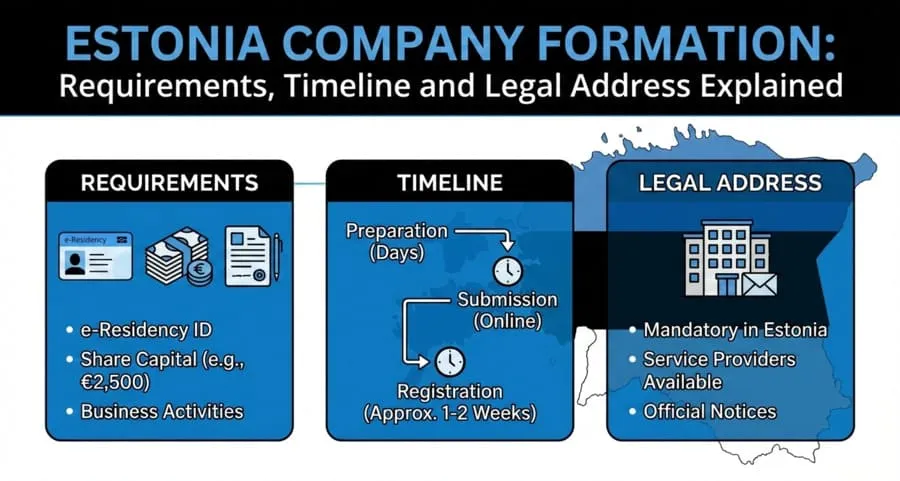
This guide explains the key requirements, estimated timeline, and legal address rules for registering a company in Estonia.
Why Entrepreneurs Choose Estonia for Company Formation
Estonia is widely known for its e-Residency program, which allows non-residents to access Estonian digital services and manage a company online. While e-Residency is not mandatory for everyone, it has made Estonia popular among international entrepreneurs, IT professionals, freelancers, and startup founders.
Some of the main reasons Estonia is considered a strong jurisdiction for company formation include:
- Access to the European Union market
- Fast online registration process
- Clear and predictable legal framework
- Modern corporate administration tools
- Competitive tax system for reinvested profits
What Type of Company Can You Register in Estonia?
The most common business structure for foreign entrepreneurs is the Private Limited Company, known in Estonia as an OÜ (osaühing).
An Estonian OÜ is similar to an LLC in the United States or a limited company in the UK. It offers limited liability protection, meaning shareholders are generally not personally responsible for company debts.
Key features of an Estonian OÜ include:
- One or more shareholders (individuals or legal entities)
- One or more board members
- Liability limited to company assets
- Flexible management structure
- Suitable for small and medium businesses as well as startups
Estonia Company Formation Requirements
To register a company in Estonia, you typically need the following:
1. Company Name
The name must be unique and not misleading. It is recommended to check availability before filing.
2. Registered Legal Address in Estonia
Every Estonian company must have an official registered address located in Estonia. This is mandatory and must be valid at all times.
3. Management Board Member
An OÜ must have at least one management board member. The board member does not need to be an Estonian resident.
4. Shareholder Information
You must provide identification details of all shareholders, including their legal names and addresses.
5. Articles of Association
This document defines the company’s structure, share capital, and governance rules.
6. State Registration Fee
The Estonian government charges a registration fee for company formation, usually paid during the online filing process.
Legal Address in Estonia: What It Means and Why It Matters
A legal address is the official address of the company registered in the Estonian Commercial Register. This address is used for official communication with authorities and for receiving legal notices.
Many international entrepreneurs use a professional service provider to obtain a legal address in Estonia, especially if they do not have a physical office in the country.
A proper legal address is important because:
- It is required by law for company registration
- It ensures your company receives official correspondence
- It supports compliance with AML and business regulations
- It reduces the risk of administrative penalties
If an Estonian company does not maintain a valid legal address, authorities may issue warnings or, in serious cases, start deletion procedures from the register.
Contact Person Requirement for Foreign-Owned Companies
In many cases, non-resident founders must appoint a contact person in Estonia. The contact person is a legal representative who can receive documents and notices from Estonian authorities.
This requirement depends on the company’s management structure and whether board members are residents of Estonia or the EU/EEA.
A contact person does not manage daily operations but serves as an official communication channel, helping the company stay compliant.
Step-by-Step Process: How to Register a Company in Estonia
The standard process of Estonia company formation usually includes:
Step 1: Preparation of Company Data
You gather information about shareholders, board members, company name, and business activity.
Step 2: Selecting a Legal Address Provider
If you do not have an office in Estonia, you arrange a legal address service.
Step 3: Filing Registration Documents
Registration can be completed online through the Estonian Business Register (especially with e-Residency) or via a notary.
Step 4: Payment of State Fee
The registration fee must be paid before the filing is finalized.
Step 5: Company Registration Approval
Once approved, the company is entered into the Commercial Register and receives its registration code.
Step 6: Opening a Business Bank Account
After incorporation, the company may open an account with an Estonian bank or a European fintech provider.
Step 7: Accounting and Reporting Setup
Every Estonian company must maintain proper bookkeeping and submit annual reports.
Estonia Company Formation Timeline
The timeline depends on the method of registration and document readiness.
In general:
- Online registration with e-Residency: 1–5 business days
- Notary registration (without digital ID): 1–2 weeks
- Bank account opening: 1–4 weeks depending on provider
- VAT registration (if needed): 5–30 days
Many entrepreneurs can complete the core registration process within one week, but full operational readiness may take longer depending on banking and compliance steps.
Compliance Obligations After Registration
Forming a company in Estonia is only the first step. Founders must also maintain compliance, including:
- Accounting and bookkeeping
- Filing annual reports
- Submitting VAT declarations (if registered for VAT)
- Maintaining a valid legal address and contact person
- Following AML rules when applicable
Failure to file annual reports is a common reason companies face penalties or legal complications in Estonia.
Final Thoughts
Estonia is one of the most efficient jurisdictions in Europe for company formation, especially for international entrepreneurs looking for a transparent and digital-friendly environment. However, legal compliance should not be underestimated.
A correct legal address, proper registration documentation, and a clear understanding of ongoing obligations are essential for long-term business stability. With the right preparation, Estonia company formation can be a smooth process and an excellent gateway to the EU market.