
By D’Angelo M. Lowe, Founder and Managing Attorney, Lowe Law PLLC · Houston, Texas | Last reviewed: October 2026
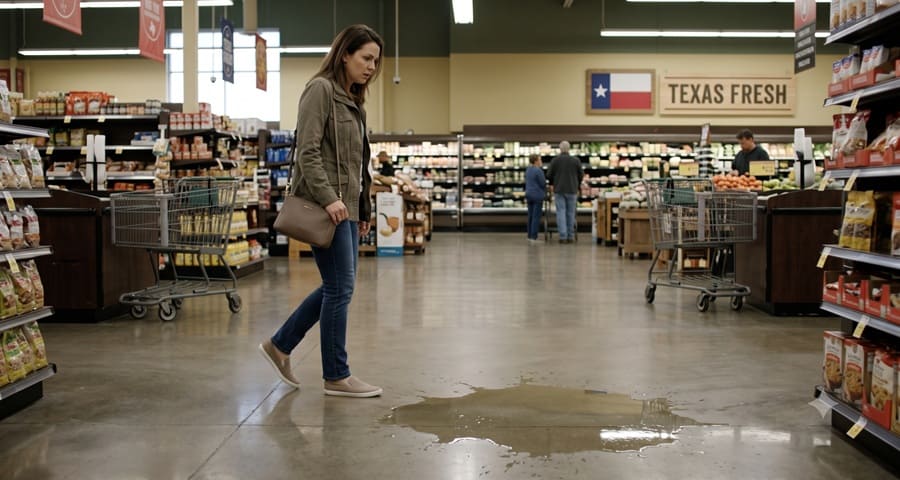
A shopper sees water spread across the only entrance to a store and steps carefully through it. An apartment visitor knows the single staircase out of the building is dark and uneven, and uses it anyway. Both fall. Both later tell an insurance adjuster, “Yes, I saw it.”
In Texas, that admission matters a great deal. Property owners generally have no duty to warn about or fix a danger that is open and obvious or already known to the visitor. But “you saw it, so you lose” is not the whole rule. Texas recognizes exceptions, and a June 2026 Texas Supreme Court decision drew a new line around one of them.
| Situation | Usual result in Texas |
| Hazard was hidden, and the owner knew or should have known about it | Owner owes a duty to warn or make it safe |
| Hazard was open and obvious, or the visitor knew about it | Generally no duty, so no premises claim |
| Visitor had to use the dangerous area and could not avoid the risk | Necessary-use exception: duty remains; visitor’s knowledge goes to fault |
| Danger came from foreseeable criminal activity | Criminal-activity exception: duty may remain |
| Visitor was an independent contractor hired to work there | Necessary-use exception does not apply (2026) |
The Basic Elements of a Texas Slip-and-Fall Claim
A customer, guest, or other invitee hurt on someone else’s property generally has to prove that the owner knew or reasonably should have known of a condition posing an unreasonable risk of harm, failed to use reasonable care to reduce or eliminate the risk, and that the failure caused the injury. FindAttorneys.org’s overview of the elements of a premises liability case covers those basics.
Proving the owner’s knowledge is often the hardest part. If another shopper spilled a drink seconds before the fall, and no employee saw it, the store may not have had time to discover it. Evidence of how long a hazard existed, such as surveillance video, cleaning logs, footprints or cart tracks through a spill, and employee testimony, frequently decides these cases.
Why an Obvious Hazard Changes the Duty
In Austin v. Kroger Texas, L.P. (2015), a Kroger employee slipped while cleaning an oily spill in a store restroom and fractured his femur. The Texas Supreme Court held that a property owner generally satisfies its duty by warning of or fixing concealed dangers, and that it has no duty to warn of or protect against hazards that are open and obvious or known to the invitee.
The Court treated this as a question of duty, not just comparative fault. That distinction matters. If there was no duty, the claim fails entirely, often on summary judgment before a jury ever hears it. Comparative fault, by contrast, only reduces the recovery.
A warning sign works the same way. A store that places a visible cone next to a spill may argue it met its duty by giving an adequate warning, not merely that the customer shares the blame.
The Necessary-Use Exception
Austin also confirmed two exceptions in which a landowner still owes a duty even though the visitor knew of the danger. The first is the necessary-use exception, which the Court traced to Parker v. Highland Park, Inc., 565 S.W.2d 512 (Tex. 1978). In Parker, a woman fell on a poorly lit staircase at her sister’s apartment complex. She knew the stairs were dangerous, but they were her only way out.
Under Austin, the exception applies when the invitee must use the dangerous premises and the owner should have anticipated that the invitee cannot take measures to avoid the risk. In those cases, the visitor’s knowledge does not erase the owner’s duty. It becomes part of the comparative fault analysis instead.
The second exception covers dangers created by foreseeable criminal activity of third parties, such as a poorly secured parking area with a history of assaults.
Necessary does not mean inconvenient
The necessary-use exception is narrow. Having to walk around the long way, wait for an employee, or use a second entrance usually does not make a route “necessary.” Picture two store entrances: one has a clearly visible spill, and the other, a short walk away, is dry and open. A customer who chooses the wet one will have a hard time invoking the exception. A tenant whose only exit is the broken staircase is in a very different position.
The 2026 JMI Contractors Decision
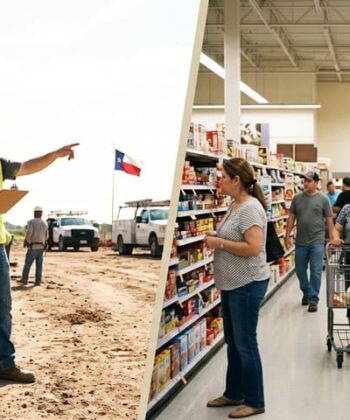
On June 26, 2026, the Texas Supreme Court decided JMI Contractors, LLC v. Medellin. Jose Medellin, an experienced independent roofer working on an apartment project in San Antonio, was pulling roofing membrane across the roof when he lost track of the edge and fell about 30 feet. A jury awarded more than $3.3 million in compensatory damages and $1 million in exemplary damages.
The Supreme Court reversed and rendered judgment for the general contractor. It held that “the necessary-use exception does not reach independent contractors.” A contractor who agrees to work on a roof accepts an obvious fall risk and is expected to evaluate and guard against obvious jobsite hazards, using the skill and equipment the job requires. The Court also held the claim was a premises claim rather than a negligent-activity claim, because the injury came from the unguarded roof edge.
JMI does not change the rules for customers, tenants, or guests. It draws a line based on who encountered the hazard and why they were there.
“Obvious” in a Photo Is Not Always Obvious in the Moment
Insurers often rely on post-accident photos that show a crack, puddle, or raised edge plainly. But the legal question is whether the danger was open and obvious to a reasonable person approaching it at the time, not whether it is visible once someone points to it.
Lighting, glare, the angle of approach, the color of the floor, crowds, and displays designed to draw attention elsewhere can all affect what a visitor could actually see. Clear liquid on a polished floor may be obvious from one direction and nearly invisible from another. Photographs taken at the visitor’s eye level, from the direction they were walking, and in the same lighting are often more useful than close-ups taken afterward.
What a Recorded “I Saw It” Can Mean
Shortly after a fall, store managers and adjusters often ask whether the person saw the hazard. An honest “yes” can become the center of the defense. It is also not always the end of the case. Follow-up questions matter: Was there another way to get where you needed to go? Could you have avoided the risk? Were you an invitee, or were you working on the property?
These are the facts lawyers on both sides try to pin down early, through store layout diagrams, video, and witness statements. Firms that handle these claims, including The Insurance Outlaw slip and fall legal help, typically look at the layout and alternatives as closely as the hazard itself, since necessity can decide whether the owner owed any duty.
A Restaurant Slip and Fall Resolved for $750,000
Lowe Law PLLC’s published case results include a $750,000 recovery for a slip and fall at a national chain restaurant. The listing does not describe the hazard, whether it was visible, or how fault was disputed, so the case is not offered as an example of the open-and-obvious rule.
It does show the type of claim where these issues often arise. Restaurant floors near drink stations, kitchens, and restrooms can be wet for routine reasons, and the outcome frequently turns on how long a condition existed, whether employees created or knew about it, and whether any warning was adequate.
Past results do not guarantee a similar outcome. Each case is different.
Knowledge Can Still Reduce a Recovery
Even when a claim survives under the necessary-use exception, the visitor’s awareness of the risk can count against them. Under Texas’s proportionate responsibility statute, Civil Practice and Remedies Code § 33.001, an injured person who is more than 50% responsible recovers nothing, and a lower percentage reduces the award.
Texas premises claims also have a two-year filing deadline under § 16.003. Video, cleaning logs, and incident reports are often deleted much sooner, so a written request to preserve them is worth sending early.
Frequently Asked Questions
If I saw the spill before I slipped, can I still sue in Texas?
Possibly, but it is harder. Generally, an owner has no duty regarding an open and obvious or known hazard. The main exceptions are when using the dangerous area was necessary and you could not avoid the risk, or when the danger came from foreseeable criminal activity.
Does a wet floor sign protect a store from liability?
Often, if the sign gave an adequate warning of the specific hazard. Whether a warning was adequate, visible, and placed where the customer would see it can be disputed.
Does the 2026 JMI Contractors ruling affect customers?
No. It holds that independent contractors cannot use the necessary-use exception. Customers, tenants, and guests can still rely on it when its requirements are met.
Who decides whether a hazard was open and obvious?
It depends on the evidence. When the facts are clear, a judge may decide it as a matter of law. When reasonable people could disagree about what was visible, a jury usually decides.
Authorities & Sources
- Austin v. Kroger Texas, L.P., No. 14-0216 (Tex. 2015)
- JMI Contractors, LLC v. Medellin, No. 24-0846 (Tex. June 26, 2026)
- Tex. Civ. Prac. & Rem. Code § 33.001: Proportionate responsibility
- Tex. Civ. Prac. & Rem. Code § 16.003: Two-year limitations period
Disclaimer
This article provides general information about Texas premises liability law. It is not legal advice, and reading it does not create an attorney-client relationship. Court interpretations change, and every case depends on its own facts. Anyone injured on someone else’s property in Texas should speak with a licensed Texas attorney about their situation.