
By Matthew J. Weiss, Esq. | Reviewed and updated September 2026
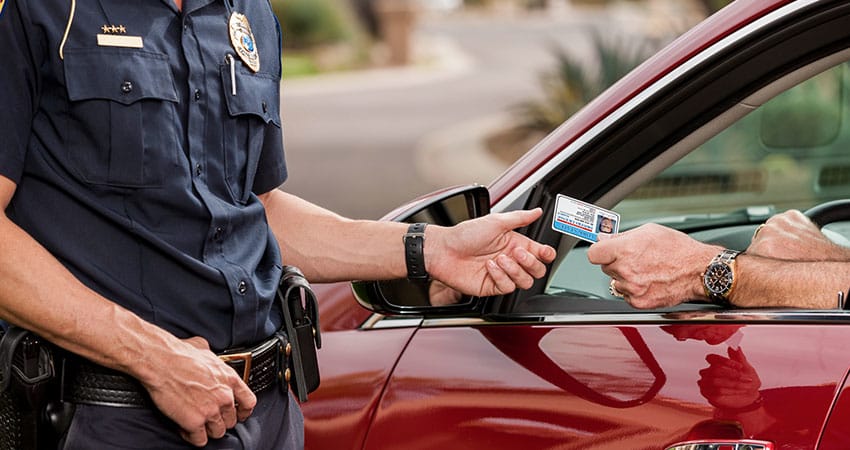
Getting pulled over for a traffic violation is always vexing. While the concept is understandable — and is often necessary — sometimes the system can be considered excessive and monetarily based.
For example, pulling over a motorist who is driving recklessly is crucial to keeping people safe. But what about routine stops for people who are allegedly driving a mile or two over the speed limit, or have a broken tail light during daylight hours, or any other technical, minor infraction?
We are not advocating for freely breaking the law. However, a recent New York Times report revealed that a whopping 730 municipalities raise revenue from precisely these types of traffic stops. The question then becomes: are drivers being pulled over for the right reasons?
The Use of Traffic Fines and Fees to Raise Revenue
Using traffic fines to raise revenue is nothing new or unique to a specific jurisdiction. Between 2010 and 2017, a significant portion of city governments in New York State increased their budgets by about 25% as a result of traffic stop fines.
Two examples include the city of Buffalo, where traffic fines accounted for 24% of revenue for the fiscal year 2019–2020, and Poughkeepsie, where such revenue accounted for a staggering 46% for the 2019 budget.
Then there is also Valley Brook, Oklahoma, which is a small town of 870 residents. It raises about $1,000,000 a year in revenue from traffic infractions.
Some of these fines can cross the line from routine to flabbergasting. NPR’s economics podcast, The Indicator from Planet Money, investigated such practices. One of the people they interviewed, Orlando, FL resident, Celeste Sawyer, related how she was stopped at a red light, when one of her twins saw a police officer, unbuckled her seatbelt and rolled down the window to say hello to the officer. The police officer then pulled over in front of Celeste’s car and issued her over $1,000 in fines for seat belt ticket violations (one for each of her kids).
Turner County and Norman Park (both in rural Georgia) also rely heavily on revenue raised from traffic tickets to finance their governments. And Governing magazine conducted an analysis on such practices. Their findings indicated that hundreds of small towns significantly rely on traffic fines to fund their budgets.
Relying on these stops to raise revenue sometimes places police officers in an uncomfortable situation. Once a municipality becomes accustomed to relying heavily on these funds for their annual budgets, law enforcement sometimes will look for even the smallest or most technical of infractions.
On a much larger scale, this issue also affects federal funding, since the federal government provides highway safety grants that reward a high incidence of traffic tickets. These grants come in the tune of $600 million a year. Granted, the funds are not simply awarded to applicants with the highest number of traffic tickets alone. However, they are taken into account to evaluate police performance.
The Data Keeps Confirming the Same Pattern
This isn’t a problem that quietly went away after 2021. A 50-state data and policy report released by Reason Foundation in June 2026 compiled audited financial statements from more than 10,000 cities and counties nationwide, and the New York-specific numbers are hard to ignore: New York collected more than $1 billion in fines and forfeitures in fiscal year 2022 alone, and led every state in the country on a per-capita basis — $75.81 per resident, about 1.4 times higher than the next-closest state.
The report also found what should, by now, be an unsurprising pattern: jurisdictions that lean harder on fine revenue tend to have lower crime clearance rates, and cities and counties tend to increase citation volume following revenue shortfalls — which is precisely the dynamic that turns a public safety tool into a budget lever. Nationally, 275 jurisdictions across 25 states now collect more than 10 cents in fines for every dollar of general revenue, concentrated heavily in Louisiana, Georgia, Tennessee, Illinois, and Oklahoma.
The reform picture is mixed. About half of all states now have some form of police quota ban on the books, but the report found that most lack real enforcement teeth. Only a handful of states — Alabama, Georgia, Missouri, Oklahoma, Texas, Utah, and Maryland — have gone further and capped how much general revenue a locality can draw from fines at all. New York currently has neither.
The Problems With These Types of Traffic Stops
Every single day, there are legitimate reasons to pull someone over. Driving under the influence of drugs and alcohol, weaving in and out of traffic at excessive speeds, trucks carrying excessive cargo. These behaviors put people’s lives at risk.
And that is precisely what society needs: law enforcement that puts public safety as their first priority (as opposed to raising revenue or meeting quotas). When you switch priorities incentivized by budgetary reasons, it encourages harmful consequences, including:
Civil Rights Violations
In theory, people cannot be imprisoned for failing to pay their debts. Creditors can take debtors to court in a civil case. They also have several ways of enforcing judgments — such as garnishing a portion of a defendant’s wages or placing a lien on their property. But when these debts are the result of traffic stop violations, you can get a warrant for your arrest for nonpayment.
This is why, in January 2021, a group called Lawyer’s Committee for Civil Rights Under Law filed a lawsuit against Valley Brook and three of its public officials. The claim is for alleged unconstitutional debt collection from poor residents.
The plaintiffs’ attorneys in that suit point out how such methodologies of raising revenue have a dire effect — that of sending to jail people who cannot afford to pay them. And this is not a problem just in Valley Brook. This is happening all over the nation. The U.S. Department of Justice’s 2015 investigation of Ferguson, Missouri remains the clearest official documentation of how this plays out at scale: federal investigators found that city officials routinely pressured the police department to increase citation revenue, producing a pattern of unconstitutional policing that the Reason Foundation report cites as still shaping reform debates a decade later.
What This Looks Like From the Defense Side
The systemic numbers are one thing; what it looks like for an individual driver is another. Attorneys at Weiss & Associates, P.C. have represented clients caught in exactly this dynamic, where a high volume of minor, technical citations — rather than any single serious violation — put someone’s livelihood at risk. In one such case handled by the firm, a professional driver faced 27 separate charges requiring appearances across five different court venues, including criminal court in Manhattan, over roughly a two-year span. None of the individual violations were serious on their own, but the accumulated points alone were enough to threaten a suspension of the client’s license — and with it, his ability to work. Through a coordinated defense across all five venues, the firm obtained “not guilty” findings in 20 of the 27 cases; of the seven that resulted in a finding against the client, only five carried points, keeping him under the threshold for suspension. It’s a useful illustration of the piece’s broader point: the harm from high-volume, technical enforcement often isn’t any single ticket, but the cumulative weight of many small ones landing on someone who depends on a clean license to earn a living.
Traffic Stops that Escalate Quickly
It is no secret that this country has seen its fair share of what were supposed to be simple traffic stops ending with law enforcement shooting a motorist. Things get even uglier when it was a white police officer and an African-American driver. Recent examples include Phillando Castille, Rayshard Brooks, and Daunte Wright. These are just a few instances of traffic stops for minor violations that escalated quickly.
It is easy for people who were not at the scene to point out that if the motorists had followed instructions, they would be alive today. But that oversimplifies the issue and ignores the bigger problem: All of these deaths originated with a traffic stop for a minor infraction, and ended with the shooting of unarmed individuals.
Racial Bias
This is a hot topic, but it would be remiss to discuss the subject at hand without bringing it up. Researchers from Stanford University conducted a study that took a close look at 100 million police traffic stops across 21 state patrol agencies and 29 municipal police departments. That is not a typo. One hundred million. It is a pretty significant sample size. In fact, it is the largest one ever collected.
And here is the unsurprising result: Between 2011 and 2017, police officers stopped minority motorists based on less evidence used to stop white drivers.
By the same token, a recent report issued by the Fiscal Policy Institute (FPI) warns New York governments against attempting to restore the economy in the wake of the COVID-19 pandemic through traffic fines — since this method is often used to exploit low-income neighborhoods and communities of color.
Similarly, after reviewing data from 9,000 cities across the United States, a study conducted by Michael Sances (from the University of Memphis) and Hye Young You (from Vanderbilt University) concluded that using traffic fines and court fees to raise revenue disproportionately affects underserved communities.
This is not a matter of officers being blatantly racist. Few people would readily admit to such behavior — even to themselves. But it does point to the implicit bias and systemic racism that is embedded into many elements of criminal justice.
Raising revenue is an integral part of any government, regardless of its size. However, the main duty of police officers is to protect and serve the community. Balancing the budget sheet should not be a responsibility that is placed on their shoulders — and clearly, there is enough data, from 2021 through the newest 2026 nationwide dataset, to showcase the troubling consequences of doing so.
Sources & Authorities
- Taxation by Citation: A 50-State Data and Policy Report on Local Government Fines and Forfeitures — Reason Foundation (June 2026)
- Investigation of the Ferguson Police Department — U.S. Department of Justice, Civil Rights Division (March 2015)
- Ticket Quotas, and the Officers Who Fought Them — The New York Times
- Inside 100 Million Police Traffic Stops: New Evidence of Racial Bias — NBC News (Stanford Open Policing Project)
- Police Fines Fund City Budgets, But At A Cost — NPR