

By Mahmood Haque, Founder and Managing Attorney, Haque Law, PLLC · Houston, Texas | Last reviewed: October 2026
Why Texas Contractors Face a Different Premises-Liability Rule Than Store Customers
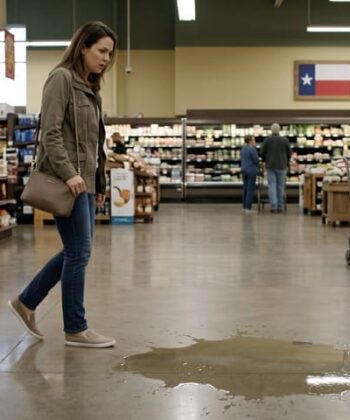
A shopper slips on a leaking cooler in a Houston grocery store. The same week, an HVAC technician is burned while repairing that cooler’s refrigeration line. Same building, same equipment, same owner.
Texas law can treat those two injuries very differently. The shopper’s claim follows ordinary premises-liability rules. The technician’s claim may fall under Chapter 95 of the Texas Civil Practice and Remedies Code, which makes it considerably harder to hold the property owner responsible.
| Store customer (invitee) | Contractor under Chapter 95 | |
| What the owner had to know | Actually knew or reasonably should have known of the hazard | Must have actually known of the danger |
| Control over the work | Not an element | Owner must have exercised or retained control over how the work was done |
| Warning | Owner must reduce or warn of an unreasonable risk | Owner must have failed to adequately warn, and no warning is needed if the worker already fully knew the danger |
| Type of property | Any premises | Property used primarily for commercial or business purposes |
Who Chapter 95 Covers
Chapter 95 applies to claims for personal injury, death, or property damage to a contractor, a subcontractor, or an employee of either. The injury must arise from the condition or use of an improvement to real property that the contractor or subcontractor is constructing, repairing, renovating, or modifying. The “property owner” must own real property used primarily for commercial or business purposes, so a homeowner who hires a roofer is generally outside the statute.
“Improvement” is read broadly. Courts have applied it to buildings, but also to equipment, pipelines, wells, furnaces, electrical systems, and other fixtures that are part of the real property. Pinning down which improvement the worker was working on is often the first disputed issue in a case.
Chapter 95 does not reach customers, visitors, or delivery drivers who are not doing improvement work. Their claims follow the ordinary rules covered in FindAttorneys.org’s overview of the elements of a premises liability case.
Pleading It as Something Else Does Not Avoid the Statute
Injured workers sometimes frame their claims as negligent activity, such as an owner’s employee opening the wrong valve, rather than a dangerous premises condition. In Ineos USA, LLC v. Elmgren (2016), the Texas Supreme Court held that Chapter 95 applies to all negligence claims arising from the condition or use of the improvement, not just premises claims. The Legislature drew no line between those theories, and the Court declined to create one.
Elmgren was a boilermaker replacing valves on a refinery furnace when gas leaking from a valve roughly 200 feet away caused an explosion. The Court treated the interconnected furnaces and piping as a single improvement, so Chapter 95 applied even though the leak was not at the exact spot where he was working. The Court also stated the limit: the statute applies only when the injury results from a condition or use of the same improvement on which the contractor is working.
In Energen Resources Corp. v. Wallace (2022), the Court added that Chapter 95 still applies when negligence elsewhere on the property contributes to the injury, as long as negligence involving the improvement the worker was on is a cause of the damages.
The Two Things an Injured Contractor Must Prove
Under § 95.003, a property owner is not liable unless both of these are true.
1. The owner controlled how the work was done
The owner must have exercised or retained some control over the manner in which the work was performed. The statute excludes the routine rights most owners keep: ordering work to start or stop, inspecting progress, and receiving reports. Telling a contractor what to fix is usually not enough. Dictating how to do dangerous work, such as refusing to shut down equipment or requiring a particular procedure, can be.
Contract language matters, but so does what actually happened on site. Safety meetings run by the owner, owner-issued work permits that set conditions, and instructions from the owner’s supervisors can all bear on control.
2. The owner actually knew of the danger and failed to adequately warn
Ineos explains that actual knowledge means knowing the dangerous condition existed at the time of the accident. Evidence that the owner should have discovered it through a reasonable inspection, which is often enough for a store customer, does not meet the Chapter 95 standard.
That puts weight on records created before the injury: maintenance logs, prior incident reports, work orders, internal emails, permit conditions, and testimony from the owner’s operators about what they knew that shift.
When the Worker Already Knew the Risk
SandRidge Energy, Inc. v. Barfield (2022) addressed the warning element. John Barfield, a lineman for a contractor, was adding lines to electrical poles about four feet from energized supply lines. SandRidge had refused to de-energize them. After months of doing the same task, Barfield was shocked and lost both arms.
The Texas Supreme Court held that SandRidge did not fail to adequately warn, because Barfield already fully knew and appreciated the danger. In the Court’s words, “If a warning would not improve upon an invitee’s knowledge of the danger, then the law does not require a landowner to deliver one.”
The ruling is a hard result for workers in visibly dangerous jobs. But it also shows the other side: when a hazard is hidden and the owner knows about it while the contractor does not, the warning element can look very different.
How Lawyers Sort These Cases
Many contractor injuries look like ordinary premises cases at first: a fall through a damaged roof deck, a shock from a mislabeled panel, a burn from a line that was supposed to be isolated. Before evaluating fault, the analysis usually works through these questions:
- Was the property used primarily for commercial or business purposes?
- Was the injured person a contractor, subcontractor, or their employee?
- What improvement was being built, repaired, renovated, or modified?
- Did the injury arise from the condition or use of that same improvement?
- Did the owner control the manner of the work, beyond start, stop, and inspection rights?
- Did the owner actually know of the specific danger, and was a warning given or unnecessary?
If the answers point outside Chapter 95, the ordinary invitee standard applies, and the owner’s constructive knowledge can be enough. Texas premises liability attorneys and defense counsel often spend the early part of a case on exactly this classification, because it decides which legal standard governs before damages are ever discussed.
Chapter 95 protects property owners, not everyone on the site. A general contractor, another subcontractor, or an equipment manufacturer may face claims under different rules, and Ineos held that the statute’s protection does not extend to the owner’s individual employees.
Workers’ Compensation and Nonsubscriber Employers
Texas is the only state where most private employers can choose not to carry workers’ compensation. Under Texas Labor Code Chapter 406, an employer that opts out, often called a nonsubscriber, can be sued directly by its injured employee and loses several common defenses. A contractor’s employee hurt on a client’s property may therefore have a claim against the employer, the property owner, or both, under different standards.
When the employer does carry coverage, the worker generally receives benefits from that carrier and cannot sue the employer for negligence, but can still pursue a third party such as the property owner. Section 95.004 adds a specific rule for these trials: the judge, outside the jury’s presence, deducts workers’ compensation benefits paid from the damages award, but only if the carrier has waived its subrogation rights.
Filing Deadline
Most Texas personal injury claims, including Chapter 95 claims, must be filed within two years under Tex. Civ. Prac. & Rem. Code § 16.003. Texas also bars recovery when the injured person is more than 50% responsible and reduces damages by any lower percentage. Owner-controlled evidence such as permits, logs, and camera footage can be lost well before that deadline.
Frequently Asked Questions
Does Chapter 95 apply to injuries at a home or apartment?
Generally not to a private home, because the statute covers property used primarily for commercial or business purposes. Apartment complexes and other rental property are operated as businesses, so the question depends on how the property is used.
Does Chapter 95 apply if I was a delivery driver or inspector?
Usually not. It applies to contractors, subcontractors, and their employees who are constructing, repairing, renovating, or modifying an improvement. A worker on site for another purpose may fall under ordinary premises rules.
Can a property owner avoid liability just by saying it did not know?
No. Actual knowledge can be proven with circumstantial evidence, such as prior complaints, maintenance records, or the owner’s own employees’ testimony. The point is that “should have known” is not enough.
What if the owner told my crew how to do the job?
That can satisfy the control element, but only if it concerned the manner of the work connected to the injury. Control still has to be paired with actual knowledge and a failure to adequately warn.
Authorities & Sources
- Tex. Civ. Prac. & Rem. Code Chapter 95: Property Owner’s Liability for Acts of Independent Contractors
- Ineos USA, LLC v. Elmgren, 505 S.W.3d 555 (Tex. 2016)
- SandRidge Energy, Inc. v. Barfield, 642 S.W.3d 560 (Tex. 2022)
- Tex. Civ. Prac. & Rem. Code § 16.003: Two-year limitations period
- Texas Labor Code Chapter 406: Workers’ compensation coverage election
Disclaimer
This article provides general information about Texas premises liability and Chapter 95. It is not legal advice, and reading it does not create an attorney-client relationship. Court interpretations change, and the outcome of any claim depends on its specific facts. Anyone injured on someone else’s property should speak with a licensed Texas attorney about their situation.