
Most people step into an elevator or onto an escalator without a second thought. These machines feel safe, routine, and almost invisible. But when something goes wrong, the consequences can be severe, and figuring out who is legally responsible is rarely simple.
For property managers, building owners, and real estate professionals, understanding the legal landscape around elevator and escalator accidents is not optional. It is a core part of operating a building responsibly and protecting against serious liability exposure.
This article breaks down who owes what duty of care, how liability gets divided when machinery fails, and what injured riders typically need to prove to seek compensation.
Why Liability in These Cases Gets Complicated
Elevator and escalator accidents happen more often than most people expect, and when they do, identifying the responsible party is rarely straightforward. Multiple parties are often involved in the ownership, maintenance, and operation of this equipment, and liability can fall on any one of them, or several at once.
The Core Question: Who Is Responsible?
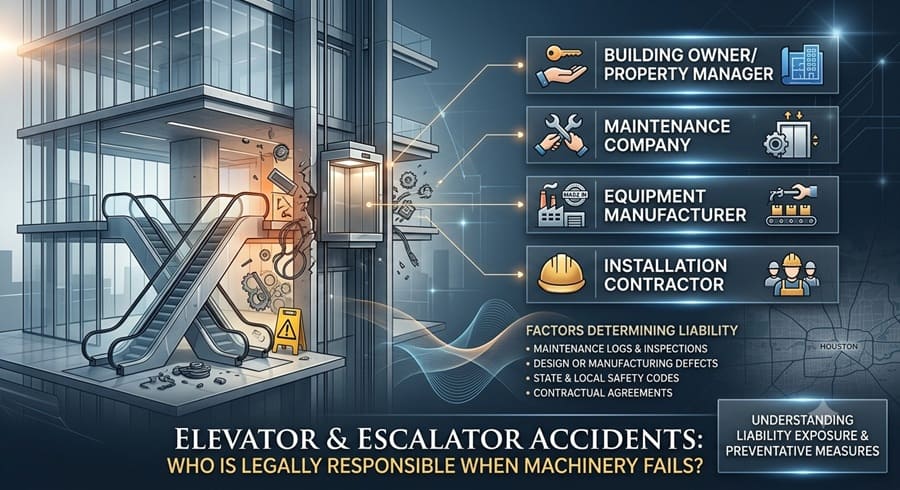
Liability in elevator and escalator accidents typically falls across multiple parties. The key factors are who owned the equipment, who maintained it, who installed it, and what caused the failure. How you handle the situation after an injury also matters, and certain mistakes can seriously damage a personal injury claim. Here is how each party’s responsibility typically breaks down:
1. Building Owners and Property Managers
Property owners carry the most direct duty of care when it comes to elevator and escalator safety. Under premises liability law, they are required to maintain safe conditions for anyone lawfully on the property, including tenants, visitors, customers, and employees.
This duty includes scheduling routine inspections, responding promptly to reported problems, and ensuring the equipment meets applicable safety codes. If a building owner knew about a malfunction and failed to act, or allowed inspections to lapse, they are likely to face a negligence claim.
It is also worth noting that tenants or businesses leasing space in a building can sometimes share liability if they had control over the area where the accident occurred.
2. Elevator and Escalator Maintenance Companies
In many buildings, the hands-on work of maintaining and inspecting elevators is contracted out to a specialized elevator service company. These companies assume their own legal responsibilities once they take on that contract.
If a maintenance company missed a scheduled inspection, failed to identify a known hazard, or improperly repaired a component, they can be held directly liable for any resulting injury. Courts look closely at maintenance logs, inspection records, and whether the company followed industry standards and manufacturer guidelines.
3. Equipment Manufacturers
When the accident stems from a flaw in the equipment itself rather than its upkeep, the manufacturer may face a product liability claim. This covers three main categories:
- Design defects: The original design was inherently unsafe, regardless of how well the unit was built or maintained.
- Manufacturing defects: A specific unit was produced incorrectly, deviating from the intended design in a way that created a danger.
- Failure to warn: The manufacturer did not adequately communicate known risks or limitations to property owners and users.
A classic example: an escalator’s emergency stop mechanism fails to engage during a malfunction. If the component was defectively designed or built, the manufacturer carries liability even if the property owner maintained the unit on schedule.
4. Installation Contractors
Elevators and escalators are complex systems. Improper installation can create hidden hazards that only manifest years later. If an installer failed to follow specifications, used incorrect components, or violated building codes during setup, they can be named as a defendant even if the accident happens long after the job was completed.
Common Questions About Elevator and Escalator Accident Claims
What types of injuries do these accidents cause?
The injury spectrum ranges from bruising and soft tissue damage at the minor end to traumatic brain injuries, spinal cord damage, crush injuries, bone fractures, and in serious cases, death. Injuries from sudden jolts, unexpected stops, or entrapment situations can be particularly severe for older adults and children, who are statistically at higher risk in these incidents.
How do investigators determine the cause of an elevator or escalator accident?
Investigations typically pull together maintenance logs, inspection certificates, building code compliance records, surveillance footage, expert engineering analysis, and witness accounts. The goal is to identify whether the failure was rooted in neglected maintenance, equipment defects, code violations, or some combination.
Can multiple parties be sued at the same time?
Yes. In most personal injury lawsuits involving elevator or escalator accidents, attorneys name every party who may share responsibility. The actual breakdown of liability often gets sorted out during discovery and negotiation. Plaintiffs benefit from naming all potentially liable parties early because some may try to point blame at one another.
What compensation can an injured person seek?
Recoverable damages typically include medical expenses (both current and future), lost wages, reduced earning capacity, physical therapy and rehabilitation, pain and suffering, and emotional distress. Severe injuries that result in permanent disability or wrongful death can produce significantly larger claims.
What if the injured person was partially at fault?
Many states follow comparative negligence rules, meaning a plaintiff can still recover compensation even if they shared some fault in the accident. The award is reduced by their percentage of responsibility. However, rules vary by state, so this is worth verifying with local legal counsel.
Inspection Requirements: What Property Owners Must Know
Most states and municipalities have specific statutes governing elevator inspection frequency, certification requirements, and documentation obligations. These laws exist precisely because elevators and escalators are high-use mechanical systems that degrade over time.
Generally, property owners are required to:
- Schedule regular inspections by licensed, state-approved inspectors or inspection companies
- Keep documentation of all inspections, repairs, and maintenance activity
- Address any noted deficiencies promptly and keep records of corrective action
- Display up-to-date inspection certificates in or near elevator cars, as required by local codes
- Post proper signage and restrict access when equipment is out of service or under repair
Failure to satisfy any of these requirements can directly strengthen a negligence claim against a building owner. Courts have consistently found that the absence of current inspection records is powerful evidence of a breach of duty.
Steps Injured Riders Should Take Immediately
For anyone injured in an elevator or escalator accident, the actions taken in the hours and days immediately after the incident can significantly affect any future legal claim:
- Seek medical attention right away, even if injuries seem minor. Head, neck, and back injuries frequently have delayed symptom onset. A medical record from the day of the accident establishes a baseline.
- Report the incident to the building management or property owner and request a written incident report.
- Document the scene by photographing or recording the elevator, escalator, any visible damage, warning signs (or lack thereof), and the surrounding area.
- Collect contact information from any witnesses present at the time of the accident.
- Do not give recorded statements to insurance representatives without first speaking with an attorney. Early statements can be used to minimize or deny claims.
Taking the right steps immediately after an accident can significantly affect any future legal claim.
What Property Managers and Building Owners Should Do to Limit Liability
Risk management in this area is straightforward in principle, even if it requires consistent execution:
- Establish and adhere to a documented maintenance schedule for all vertical transportation equipment
- Work only with licensed, insured elevator maintenance contractors
- Conduct due diligence when selecting contractors, reviewing their safety records and certifications
- Respond immediately to any reported malfunction and keep the unit out of service until cleared by a qualified technician
- Review insurance coverage to confirm adequate protection for premises liability claims involving elevator and escalator incidents
- Train building staff to recognize warning signs of mechanical issues and escalate promptly
Building owners who can demonstrate a consistent, documented maintenance program are in a far stronger position if an accident does occur. The paper trail matters as much as the actual maintenance work.
Final Thoughts
Elevator and escalator accidents sit at the intersection of premises liability, product liability, and contract law. Responsibility does not automatically fall on a single party. It gets distributed based on the specific facts: who owned the equipment, who maintained it, who manufactured it, and what the records show about how it was managed over time.
For property managers and building owners, the message is clear: maintenance and documentation are your best protection. For injured riders, the path forward usually involves preserving evidence quickly and getting experienced legal guidance before the investigation window closes.
If you or someone you know has been injured in an elevator or escalator accident, consulting with an experienced Houston elevator and escalator accident lawyer can help clarify your rights and the potential avenues for compensation.