
By Gregory C. Ward, Esq., Founder, Ward Law Group | Updated September 2026
Long Island’s mix of lively communities, bustling highways, and suburban charm creates a driving and walking environment like no other in New York. With traffic density rising and the roads populated by a variety of users, safety remains a top priority for everyone on the streets. Understanding both the practical habits and the legal rules behind them can help prevent accidents — and matter if one happens anyway.
Understanding Long Island’s Roadways
Traveling across Long Island means navigating a spectrum of road types. Major highways like the Long Island Expressway (I-495) and Sunrise Highway (Route 27) connect neighborhoods and serve as economic lifelines. Suburban streets and busy downtowns, such as Huntington or Patchogue, attract a mix of commuter and local foot traffic. Peak times, including morning and evening rush hours, heighten congestion and hazards.
Tips for Drivers
- Maintain safe distances: keep a generous buffer between your car and the one ahead, especially on busy routes during high-traffic periods, and allow more space when weather or road conditions worsen.
- Avoid distractions: phone use behind the wheel remains a leading cause of crashes. Keeping your attention on the road prevents avoidable collisions and injuries.
- Follow posted speed limits: slower speeds increase reaction time and reduce the force of any collision. Slow down further in school zones and pedestrian-heavy areas.
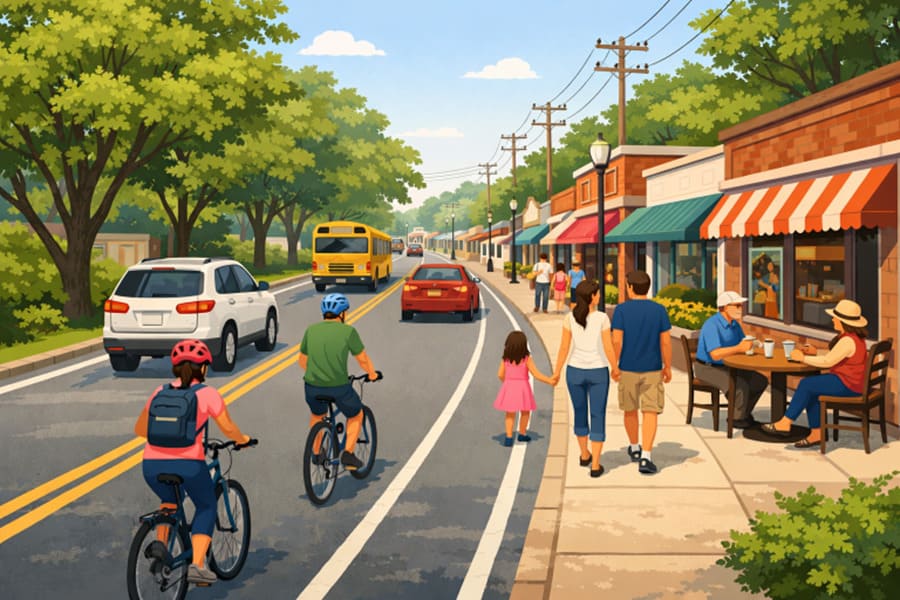
- Watch for pedestrians and cyclists: crosswalks, intersections, and residential blocks see frequent foot and bicycle traffic. Use extra caution in neighborhoods without dedicated bike lanes or with limited visibility.
It’s also worth staying informed about ongoing construction and street maintenance, which can change traffic patterns with little warning. Live GPS traffic updates or local alerts can help you avoid unexpected detours and the last-minute maneuvers that often lead to a crash.
Tips for Pedestrians
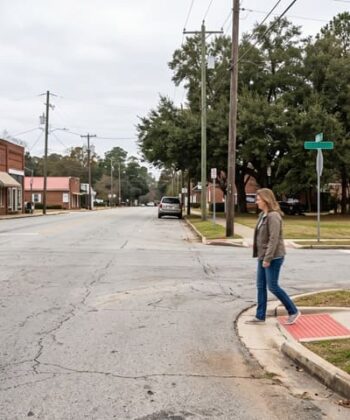
- Use designated crosswalks: crossing at marked crosswalks and following signals substantially reduces risk.
- Stay visible: wear bright or reflective clothing at dawn, dusk, and night, and consider carrying a light in low-visibility conditions.
- Stay alert: texting or wearing headphones reduces your awareness of oncoming vehicles.
- Know the higher-risk routes: heavy-traffic corridors, like Riverhead’s Main Street, carry higher accident rates and call for extra caution.
Making eye contact with a driver before crossing in front of a vehicle helps confirm you’ve been seen, and it’s worth staying especially alert near parked cars in residential areas, where a driver may pull out or open a door unexpectedly.
What New York Law Actually Says
Good habits matter, but so does knowing the rules that determine fault if a crash happens anyway. Under New York Vehicle and Traffic Law § 1151, drivers must yield the right of way to pedestrians crossing within a marked or unmarked crosswalk at an intersection, whether or not a signal controls it. A driver who fails to do so is generally negligent as a matter of law.
That doesn’t mean a pedestrian crossing outside a crosswalk has no case. New York has long followed a pure comparative negligence rule under CPLR § 1411, meaning an injured person’s compensation is reduced by their own percentage of fault rather than eliminated by it, no matter how high that percentage runs. One meaningful, recent change is worth knowing: New York’s 2026 tort reform legislation (Chapter 58, Part EE, effective May 26, 2026) added a new CPLR § 1411(b) specifically for motor vehicle personal injury actions, under which a claimant found more than 50% at fault is now barred from recovering entirely — a real departure from the old “pure” rule for this category of case. Whether the older or newer rule applies to a specific claim can depend on when the case was filed, which is exactly the kind of detail worth confirming with an attorney rather than assuming.
Navigating Weather Challenges
Weather conditions on Long Island can change rapidly, introducing hazards like black ice, rain-slicked streets, or snowy intersections. Rapidly dropping temperatures can create nearly invisible ice patches that cause cars to skid and pedestrians to slip.
- For drivers: reduce speed, brake gently, increase following distance, and use headlights during storms or heavy fog. Avoid abrupt maneuvers.
- For pedestrians: wear boots or shoes with non-slip soles when conditions are icy, take shorter and more careful steps, and watch for ice on shaded sidewalks and steps.
For broader winter driving guidance, the National Highway Traffic Safety Administration publishes detailed seasonal safety resources worth reviewing before the first hard freeze.
Staying Alert in Tourist Areas
The seasonal influx of visitors to destinations like Jones Beach, Fire Island, and the Hamptons increases driving and walking risks during peak months. Crowded parking lots, unfamiliar drivers, and higher foot traffic all call for heightened caution.
- Drivers: expect delays, be patient with out-of-state vehicles, and double-check blind spots for families and children crossing unexpectedly.
- Pedestrians: always use crosswalks in tourist zones, and anticipate vehicles turning or pulling out of parking lots quickly.
During special events and holiday weekends, allow extra travel time rather than rushing, and consider public transportation, shuttles, or carpooling where available to reduce congestion. If a collision does happen in one of these areas, the investigation can get complicated fast, since visibility, unfamiliar layouts, and out-of-town drivers all become factors; this is one of several situations where working with a Long Island personal injury lawyer early can help sort out what actually happened before memories and evidence fade.
Community Efforts and Initiatives
Local and state governments have been investing meaningfully in Long Island road safety. As part of the New York State Department of Transportation’s “Safe System” approach toward zero highway deaths, the state announced a $7 million project to reconfigure ramps, turning lanes, and signals at Exit 15 of the Southern State Parkway and its intersection with State Route 25, aimed at improving safety for both drivers and pedestrians at that corridor. A separate, statewide $43.2 million round of Safe System funding included roughly $1.58 million specifically allocated to Long Island municipalities for guardrails, signage, and pavement markings. In New York State overall, roughly 40 to 44 percent of crash fatalities occur when a vehicle departs its lane, which is part of why so much of this funding targets exactly that failure point.
Community outreach — safety workshops, public service announcements, school partnerships with law enforcement — plays a role too. The CDC’s pedestrian safety resources are a useful starting point for anyone wanting a broader, national view of what actually reduces pedestrian injuries.
Conclusion
Navigating Long Island’s roads safely is a responsibility shared by drivers, pedestrians, and the broader community. Good habits go a long way, but knowing the legal rules — crosswalk right-of-way and how fault actually gets divided after a crash — matters just as much when something does go wrong. For a closer look at how these issues play out in practice, see this overview of pedestrian accident cases in the Bronx and this rundown of common risk factors for teen drivers, both relevant to the kinds of situations Long Island drivers and pedestrians actually encounter.
Authorities & Sources
- N.Y. Vehicle and Traffic Law § 1151 — Pedestrians’ Right of Way
- N.Y. CPLR § 1411 — Comparative Negligence
- New York State — Safe System Approach Toward Zero Deaths, Long Island Funding Announcement
- NHTSA — Winter Driving Safety Tips
- CDC — Pedestrian Safety
Disclaimer
This article is provided for general informational purposes only and does not constitute legal advice. New York traffic and comparative negligence law is fact-specific and can change; the 2026 tort reform provisions discussed above may apply differently depending on when a claim was filed. Reading this article does not create an attorney-client relationship. Anyone involved in a Long Island traffic accident should consult a licensed New York attorney about the specific facts and deadlines that apply.