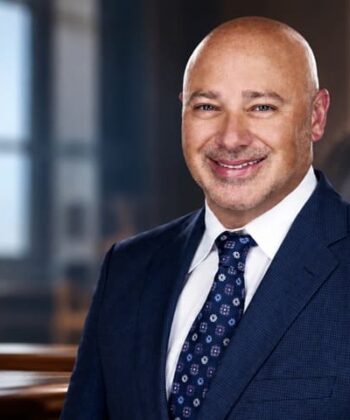


By FindAttorneys.org Editorial Team | Last reviewed: October 2026
At a Glance
- Role: Partner, Washor Kool Sosa Maiorana & Schwartz, LLP, 233 Broadway, Manhattan
- Focus: Serious personal injury, with an emphasis on construction accidents, motor vehicle crashes, brain injuries, and wrongful death
- Admitted: Massachusetts (1988); New York (1989); U.S. District Courts for the Southern and Eastern (1996) and Western (2009) Districts of New York
- Education: B.A., Ithaca College (1979); J.D., New England School of Law (1988)
- Teaching: Trial advocacy instructor for the New York State Trial Lawyers Association since 2000
Before he ever cross-examined a site supervisor, Jonny Kool worked as one of the people supervisors are responsible for. He spent nine years as a commercial fisherman, a bookstore manager, and a construction worker before going to law school. He earned his J.D. in Boston in 1988 and was admitted in New York the following year.
Nearly four decades later, Attorney Jonny Kool is a partner at a Manhattan firm whose published results include more than 30 job-site cases, and he still draws on what he learned on those sites. This profile looks at how that background shapes his work, the New York laws that drive construction injury cases, and what injured workers should do early on.
Why Time on a Job Site Changes How He Reads a Case
Construction cases turn on details that are easy to miss from behind a desk. Who set up the ladder? Was it tied off? Who was supposed to provide the harness, and was there anywhere to clip it? Was the floor opening covered with secured plywood or just a loose sheet someone dragged over it?
Kool’s firm profile says his own construction work informs how he evaluates job-site cases. In practice, that means asking the questions a worker would ask, and recognizing when a defense account of how the work was done doesn’t match how the work actually gets done.
He is just as direct about what drives his advocacy. “Because I care about my clients, it compels me to be that much more persuasive,” he says. He spends as much time as clients need to talk through their cases and what the injury has done to their work, family, and plans.
What the Firm’s Job-Site Results Look Like
The firm’s published verdicts and settlements list more than 30 construction and labor results. The page credits outcomes to the firm rather than to individual attorneys, but three entries show the kinds of cases this practice handles:
- Ladder fall, $16.9 million. A 36-year-old White Plains man who fell from a ladder was awarded $16.9 million.
- Falling pipe, $10.5 million. A Queens worker was paralyzed when a 20-foot pipe fell into a trench. The case settled during trial while the jury was deliberating.
- Bridge fall, $2.49 million. A bridge painter fell 40 feet while working on the George Washington Bridge and won a jury verdict.
All three share a feature that matters under New York law: the injury happened because of gravity, either a worker falling from height or an object falling onto a worker. That is the territory of the Scaffold Law.
Past results do not guarantee similar outcomes. Every case depends on its own facts, evidence, and law.
The New York Laws Behind Construction Injury Claims
The Scaffold Law. Under New York Labor Law § 240(1), owners and contractors must furnish proper scaffolding, ladders, hoists, and similar devices for elevation-related work. When they fail to and a worker is hurt by a fall or a falling object, liability is close to absolute. The worker’s own carelessness generally doesn’t reduce the recovery. The main exception is when the worker’s conduct was the sole proximate cause of the accident, the defense that succeeded in Ahmed v. F & G Group, LLC in 2020.
Industrial Code violations. Labor Law § 241(6) requires owners and contractors to follow the specific safety rules in New York’s Industrial Code. A claim must point to a concrete rule that was violated, and unlike § 240(1), the worker’s share of fault can reduce the award.
Suing someone other than the employer. Workers’ compensation usually bars an injured worker from suing their own employer. It does not bar claims against the property owner, the general contractor, or other companies on the site. That third-party claim is often where full compensation comes from.
Fault in other injury cases. Outside the Labor Law, New York uses pure comparative fault under CPLR 1411: an injured person’s damages are reduced by their share of fault but never barred outright. Car crash claims add another hurdle, since no-fault rules generally require a “serious injury” before a driver can sue for pain and suffering.
Teaching Other Trial Lawyers
Since 2000, Kool has taught trial advocacy for the New York State Trial Lawyers Association, helping other plaintiffs’ lawyers sharpen how they examine witnesses and present cases to juries. He is a member of both the trial lawyers’ association and the New York State Bar Association.
He describes the payoff of trial work simply: walking into a courtroom with nothing but a briefcase and walking out with a verdict that changes a client’s life.
Early Steps After a Serious Injury in New York
- Know the deadlines. Most personal injury claims must be filed within three years under CPLR 214(5). A wrongful death action generally has two years from the date of death under EPTL 5-4.1. Claims against New York City or another public entity usually require a notice of claim within 90 days.
- Preserve the scene. Photograph the work area, the equipment involved, and any missing guardrails or tie-off points. Get coworkers’ names and phone numbers before the crew moves to another site.
- Be careful what you sign or say. Tell the workers’ compensation carrier only what’s required. A separate claim against the owner or contractor may exist, and early statements can be used in it.
- Take a head injury seriously. Head injuries from falls are easy to underestimate. If one is involved, our guide to the questions to ask a brain injury attorney in New York can help you compare lawyers, along with what to look for in a firm’s track record in brain injury cases.
Disclaimer
This article is for general information only and is not legal advice. Reading it does not create an attorney-client relationship with FindAttorneys.org, Jonny Kool, or Washor Kool Sosa Maiorana & Schwartz, LLP. Case results described here come from the firm’s published verdicts and settlements and are not attributed to any individual attorney. Past results do not guarantee similar outcomes, and every case depends on its own facts. New York deadlines and rules can change, so speak with a licensed New York attorney about your situation. FindAttorneys.org is an attorney directory, not a law firm.
About the Author
The FindAttorneys.org Editorial Team writes attorney profiles and edits the plain-language legal guides published on FindAttorneys.org, a national directory that helps readers find and compare lawyers by practice area and location. Editors check statutes, deadlines, and citations against primary sources, and verify attorney credentials and case results against published biographies, bar records, and independent recognition listings. Posts are updated as the law changes. Articles are written by or with practicing attorneys and provide general information, not legal advice.
About the Featured Attorney
Jonny Kool is a partner at Washor Kool Sosa Maiorana & Schwartz, LLP in Manhattan, where he represents people seriously injured in construction accidents, motor vehicle crashes, brain injury, and wrongful death cases. Admitted in New York in 1989, he worked nine years in construction, commercial fishing, and retail before law school. He has taught trial advocacy for the New York State Trial Lawyers Association since 2000 and holds degrees from Ithaca College and New England School of Law.