
By Peter Katz, Esq. Whistleblower and Federal Criminal Defense Attorney | Law Offices of Peter Katz | Last reviewed: September 2026
Reporting suspected fraud or misconduct can involve more than deciding whether something seems wrong. A potential whistleblower may need to determine which law applies, whether the information concerns government funds, how a report should be made, whether retaliation protections are available, and whether the person’s own conduct creates civil or criminal exposure.
Those questions are especially important in New Jersey because a matter may implicate the federal False Claims Act, the New Jersey False Claims Act, the Conscientious Employee Protection Act (CEPA), a federal agency whistleblower program, or a criminal investigation. The procedures and deadlines are not interchangeable.
This guide explains the main issues a New Jersey whistleblower should understand before making a significant disclosure, filing a qui tam action, responding to investigators, or pursuing a retaliation claim.
What Is a Whistleblower Claim?
A whistleblower matter can arise when a person reports suspected fraud, legal violations, regulatory misconduct, unsafe practices, or other wrongdoing to an employer, government agency, law-enforcement body, court, or another authorized recipient. The legal rights available depend on the source of the misconduct and the law under which the disclosure is made.
Examples can include:
- fraud involving Medicare, Medicaid, federal contracts, grants, or other government funds;
- false billing or false certifications submitted to government programs;
- securities, tax, banking, or financial misconduct;
- healthcare kickbacks or other fraud schemes;
- workplace retaliation after protected reporting;
- public corruption or misuse of public funds; and
- other conduct covered by a specific federal or state whistleblower statute.
Not every workplace complaint is a False Claims Act case, and not every report of misconduct creates a right to a financial award. The legal framework should be identified before assuming which protections or remedies apply.
Federal False Claims Act: When a Qui Tam Case May Apply
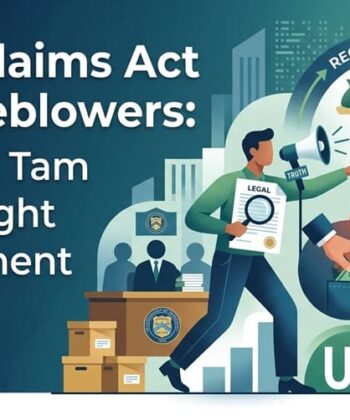
The federal False Claims Act allows a private person, known as a relator, to bring certain civil claims in the name of the United States when a person or company is alleged to have knowingly submitted or caused false claims for government money or property. 31 U.S.C. § 3730 – False Claims Act civil and qui tam actions
A Qui Tam Complaint Is Filed Under Seal
A federal qui tam complaint is not ordinarily served on the defendant immediately. Under 31 U.S.C. § 3730(b), the complaint is filed under seal for at least 60 days, and the relator must provide the government with substantially all material evidence and information in the relator’s possession. The government can seek extensions while it investigates.
The government may then intervene and take primary responsibility for the case or decline intervention, in which event the relator may continue under the statute, subject to the government’s continuing rights.
Relator Awards Are Possible, but Not Automatic
If a False Claims Act case produces a recovery, the relator’s share depends on factors including whether the government intervenes and the relator’s contribution. Federal law provides percentage ranges, but eligibility can be affected by public-disclosure rules, first-to-file issues, the source of the information, and the relator’s own role in the alleged misconduct.
A person who planned and initiated the violation may have a reduced share, and a relator convicted of criminal conduct arising from the violation can be dismissed from the action and receive no share.
New Jersey Has Its Own False Claims Act
New Jersey separately authorizes private false-claims actions on behalf of the State. Under N.J.S.A. 2A:32C-5 – New Jersey False Claims Act civil actions a private person may bring an action in the name of New Jersey, and the complaint remains under seal for at least 60 days while the Attorney General considers intervention.
The state statute also contains anti-retaliation protections for employees, contractors, and agents who engage in lawful acts in furtherance of a New Jersey False Claims Act matter or other efforts to stop violations. New Jersey False Claims Act retaliation protections
New Jersey CEPA Can Protect Employees Who Report Wrongdoing
New Jersey’s Conscientious Employee Protection Act (CEPA) is broader than a false-claims statute. It generally prohibits specified retaliatory actions against an employee who discloses or threatens to disclose certain employer conduct the employee reasonably believes violates law, is fraudulent or criminal, or conflicts with a clear public-policy mandate.
CEPA can involve internal disclosures as well as reports to public bodies, depending on the facts and statutory requirements. It also contains procedural rules that should be reviewed before a disclosure or retaliation suit is filed.
A New Jersey CEPA – civil action and remedies, N.J.S.A. 34:19-5 generally must be filed within one year of the alleged violation. That is materially shorter than many people expect, making it important to distinguish a CEPA retaliation claim from a federal False Claims Act retaliation claim.
Whistleblower Retaliation Protections Depend on the Law Involved
Retaliation can include discharge, demotion, suspension, threats, harassment, or other materially adverse employment consequences when the governing statute protects the activity at issue.
31 U.S.C. § 3730(h) – federal FCA retaliation protection protects employees, contractors, and agents from retaliation for lawful acts in furtherance of an FCA action or other efforts to stop violations. Available relief can include reinstatement, double back pay, interest, special damages, litigation costs, and reasonable attorneys’ fees. A federal FCA retaliation action generally must be filed within three years of the retaliation.
Other whistleblower laws use different definitions, procedures, administrative exhaustion requirements, and filing periods. A person should not assume that a protection available under one statute automatically applies under another.
A Whistleblower Can Also Face Criminal or Civil Exposure
A person may possess valuable evidence of misconduct while also having participated in some part of the activity being investigated. Reporting does not automatically create immunity from prosecution, civil liability, professional discipline, or repayment obligations.
This is where whistleblower and criminal-defense issues can overlap. Before providing a detailed statement to investigators, turning over documents, or entering a cooperation arrangement, the person may need advice about self-incrimination, subpoena obligations, privilege, document ownership, and the potential consequences of their own conduct.
The False Claims Act itself recognizes this problem: a relator who planned and initiated the violation may have an award reduced, and a relator convicted of criminal conduct arising from the violation cannot receive a relator share.
Do Not Assume You Can Take Any Company Records You Want
Potential whistleblowers often have access to emails, billing data, internal reports, contracts, or other documents. Evidence can be important, but possession of workplace information does not create an unlimited right to copy, remove, download, or disclose every record.
Depending on the circumstances, documents can implicate patient privacy, trade secrets, attorney-client privilege, contractual confidentiality, computer-access rules, or other legal restrictions. Preserve information lawfully available to you, do not alter or destroy records, and obtain advice before taking large datasets or confidential materials.
First-Party Case Example: A Successful False Claims Act Relator
Firm-reported, anonymized result. The Law Offices of Peter Katz reports representing a relator in a successful federal False Claims Act case against a large pharmaceutical company in which the relator received a $10 million award. The firm’s published representative-cases page does not identify the relator, defendant, underlying billing theory, government intervention decision, or settlement terms.
The example illustrates why the strength of a whistleblower matter can depend on specific, nonpublic evidence and the procedural path of the case. It should not be used to estimate the value of another claim, and no award is guaranteed merely because a person reports suspected fraud.
Past results do not guarantee or predict a similar outcome in another matter.
A Neutral Resource on Whistleblower and Criminal-Exposure Issues
Readers researching how whistleblower reporting can overlap with white-collar investigations may also encounter the Law Offices of Peter Katz resource on whistleblower claims and criminal exposure. A private law-firm page can provide practical context, but statutory requirements, agency rules, filing deadlines, and the effect of a disclosure should be checked against primary authority and the facts of the specific matter.
What Should You Do Before Reporting Suspected Fraud?
- Identify what conduct you believe is unlawful and why.
- Separate facts you personally know from conclusions or assumptions.
- Preserve records lawfully available to you without altering, fabricating, or destroying evidence.
- Avoid posting allegations publicly or contacting the media before understanding confidentiality and legal-procedure issues.
- Determine whether government funds, federal programs, state funds, securities laws, tax laws, or another regulated area are involved.
- Consider whether your own conduct could be questioned.
- Document any retaliation or employment changes after protected activity.
- Check filing deadlines before relying on internal discussions or an agency investigation to preserve your rights.
- Obtain advice before making a major disclosure if the matter involves substantial fraud, professional licensing, or potential criminal exposure.
What If Government Investigators Contact You?
An investigator may request an interview, documents, electronic records, or testimony. The legal significance depends on whether the contact is voluntary, whether a subpoena or other compulsory process has been issued, whether the person is a witness, subject, target, relator, or potential defendant, and what agency is involved.
Do not destroy documents or ignore lawful process. At the same time, a person who may face personal exposure should understand their rights and obligations before providing substantive statements or signing a cooperation agreement.
How to Evaluate a Whistleblower Attorney
A whistleblower case can combine civil fraud litigation, federal agency practice, employment retaliation, and sometimes criminal exposure. Relevant experience should be evaluated by issue rather than by general trial experience alone.
Useful questions include:
- Which whistleblower statute do you believe applies, and why?
- Have you handled qui tam or agency whistleblower matters involving the same type of fraud?
- How will you evaluate public-disclosure, first-to-file, or original-source issues?
- What retaliation protections and deadlines may apply?
- Could any of my conduct create criminal, civil, licensing, or employment risk?
- How should documents and electronic evidence be preserved?
- What happens if the government declines to intervene?
- How are attorney fees and case expenses handled?
- Who will communicate with the government and handle any parallel criminal issues?
For related employment-retaliation context, Find Attorneys also explains how workplace retaliation evidence is documented. That article addresses California law, so New Jersey readers should use it only for general evidence-preservation concepts, not for New Jersey legal standards.
For broader employment-contract issues involving reports of illegal conduct, see Can I Quit My Job if I Signed an Employment Contract?.
Frequently Asked Questions
What is a qui tam lawsuit?
A qui tam action is a lawsuit in which a private relator brings certain False Claims Act allegations in the name of the government. Federal FCA complaints are filed under seal and initially disclosed to the government rather than served immediately on the defendant.
Can I receive an award for reporting fraud?
Possibly, but not every whistleblower program offers awards and no award is automatic. Under the federal False Claims Act, a qualifying relator may receive a statutory share of a recovery, subject to the government’s intervention decision, the relator’s role, public-disclosure rules, and other requirements.
Can I report fraud if I participated in it?
Potentially, but participation can create serious legal risk. The federal False Claims Act allows a court to reduce the share of a person who planned and initiated the violation, and a relator convicted of criminal conduct arising from the violation cannot receive a share.
How long do I have to file a New Jersey CEPA retaliation claim?
CEPA generally requires an aggrieved employee or former employee to file a civil action within one year of the violation. Different whistleblower statutes use different deadlines.
How long do I have to file a federal False Claims Act retaliation claim?
Section 3730(h) provides a three-year period from the date of the retaliation for an FCA retaliation action.
Can a New Jersey False Claims Act case be filed by a private person?
Yes. N.J.S.A. 2A:32C-5 permits a private person to bring a qualifying action in the name of the State. The complaint is initially filed under seal while the Attorney General evaluates whether to intervene.
Can a whistleblower remain anonymous?
It depends on the program and procedural stage. A sealed qui tam complaint is confidential during the seal period, but that is not the same as guaranteed permanent anonymity. Other agency programs have their own confidentiality rules.
Should I copy company documents before reporting misconduct?
Do not assume you may take any record you can access. Preserve information lawfully available to you, but confidential, privileged, medical, proprietary, or restricted data can raise separate legal issues. Obtain advice before removing or transmitting sensitive records.
Does reporting misconduct give me immunity from prosecution?
No. Whistleblower status does not automatically immunize a person from prosecution or civil liability for their own conduct. Any cooperation or non-prosecution protection depends on the applicable law, government program, and specific agreement.
Authorities & Sources
- 31 U.S.C. § 3730 – Federal False Claims Act civil actions, qui tam, relator shares, and retaliation
- U.S. Department of Justice – Handling of False Claims Act qui tam suits
- U.S. Department of Justice – 2026 FCA whistleblower enforcement update
- N.J.S.A. 2A:32C-5 – New Jersey False Claims Act civil actions
- New Jersey False Claims Act – 2023 amendments and retaliation protections
- New Jersey CEPA – N.J.S.A. 34:19-5 civil action and remedies
Disclaimer
This article provides general legal information and is not legal advice. Whistleblower eligibility, qui tam procedure, retaliation protections, filing deadlines, confidentiality, document use, relator awards, and criminal or civil exposure depend on the specific law and facts. Federal and New Jersey statutes can change, and agency programs use different rules. Reading this article or following a link does not create an attorney-client relationship. Anyone considering a significant disclosure should obtain advice tailored to the relevant conduct, records, employment status, and government program.