

By Jarrett Blakeley, Founder, Blakeley Car Accident & Personal Injury Lawyers, P.A. | Last reviewed: October 2026
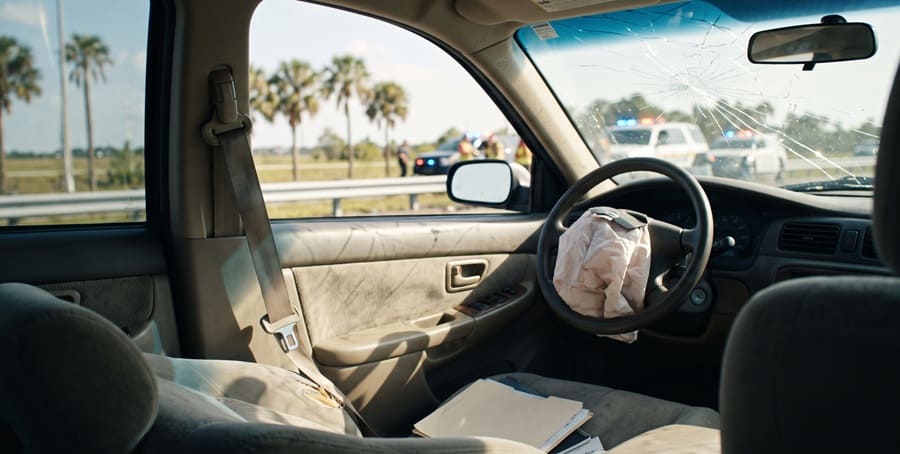
A driver is stopped at a red light on Southside Boulevard in Jacksonville when another vehicle slams into the back of the car. Who caused the crash seems obvious. Then the insurance adjuster asks a different question: were you wearing your seat belt?
The Short Answer
Yes, it can, but not automatically. Florida lets a jury treat seat-belt nonuse as comparative negligence only if the defense proves the belt was available, that not using it was unreasonable, and that the nonuse caused or substantially contributed to at least part of the injuries. Under Florida’s 2023 rule, a claimant found more than 50% at fault for their own harm recovers nothing, so how that fault is assigned matters.
The seat belt question creates two separate causation issues in the same claim: who caused the crash, and whether the injured person’s own conduct made the injuries worse. Keeping those questions apart is the key to understanding how the defense works.
What Florida’s Seat Belt Law Actually Says
Florida’s Safety Belt Law, § 316.614, generally requires drivers and front-seat passengers to be belted, and requires drivers to make sure passengers under 18 are properly restrained. For an injury case, the important language is in subsection (10). A seat belt violation:
- is not negligence per se,
- is not prima facie evidence of negligence, and
- may be considered as evidence of comparative negligence in a civil case.
That wording matters. An insurer can’t simply point to an unfastened belt and subtract a percentage from the claim. There has to be a link between the nonuse and the specific injuries being claimed.
The Defense Has the Burden of Proof
Florida’s seat belt defense comes from the Florida Supreme Court’s decision in Insurance Co. of North America v. Pasakarnis, 451 So. 2d 447 (Fla. 1984). Under that decision and the cases that followed, the defendant must plead the defense and prove:
- A seat belt was available and operational.
- The plaintiff’s failure to use it was unreasonable under the circumstances.
- The failure produced or substantially contributed to at least part of the injuries.
In Ridley v. Safety Kleen Corp., 693 So. 2d 934 (Fla. 1996), the Court confirmed that the defense is an affirmative defense of comparative negligence. Because the defendant carries the burden, it generally needs evidence, often from medical or biomechanical experts, that a belt would actually have changed the injury outcome.
Causing the Crash vs. Contributing to the Injury
Seat belt nonuse rarely explains why one vehicle hit another. In the red-light example, the unbelted driver didn’t make the distracted driver fail to brake. The defense argument is different: that some of the injuries would have been less severe if the occupant had been restrained. That is an injury-causation argument, not an accident-causation argument.
Whether it succeeds depends on the mechanics. A belt restrains forward and outward movement, so it may be relevant to a head injury from hitting the windshield. It may have little to do with a broken wrist in a side impact, or with injuries from intrusion into the passenger compartment, which would likely have happened regardless. Vehicle damage, the direction of impact, and medical records all matter.
Why the 50% Rule Raises the Stakes
Florida changed its fault system in 2023. Under § 768.81(6), a claimant found more than 50% at fault for their own harm generally cannot recover damages in a negligence action. (The rule doesn’t apply to medical negligence claims.) Before the change, Florida used pure comparative negligence, and a claimant could recover a reduced amount at any level of fault. The change applies to causes of action accruing after March 24, 2023; FindAttorneys.org has covered how Florida’s modified comparative negligence rule affects settlements.
Because the statute measures fault for a claimant’s “own harm,” a seat belt argument and an argument about driving conduct can be combined. An insurer that can’t blame the claimant for the crash may still try to push the overall fault percentage upward through the seat belt defense.
How Seat Belt Use Is Proven, or Disputed
- Physical evidence: belt webbing stretch marks, latch plate wear, and seat belt bruising on the occupant.
- Vehicle data: many event data recorders capture driver belt status in the seconds before a crash (49 C.F.R. Part 563).
- Medical and EMS records, which often note whether the patient was restrained.
- The crash report. An officer’s observations can be evidence, but statements a person makes to the officer for the purpose of completing the crash report are generally privileged under § 316.066(4). An offhand “I wasn’t buckled” to the investigating officer may not be usable against the claimant at trial.
Liability investigation draws on the same kinds of evidence; this guide on how fault is proven after a Florida car accident covers vehicle damage, witness accounts, and electronic data in more detail.
A Seat Belt Ticket Doesn’t Decide the Civil Case
A seat belt citation and civil liability answer different questions. Someone may have been ticketed for not wearing a belt, but that doesn’t establish what percentage of their injuries it caused. The statute itself rejects treating the violation as negligence per se. Equally, the absence of a citation doesn’t settle whether the person was belted; civil cases can rely on evidence beyond what the officer recorded.
What Two Years of Post-Reform Settlements Show
Blakeley Car Accident & Personal Injury Lawyers’ case results page lists dozens of car accident settlements reached since 2024, many between roughly $250,000 and $900,000, along with a $1.98 million car accident result and a $1.75 million pedestrian result. The listing gives amounts and dates, not facts, and doesn’t say whether seat belt defenses were raised in any of them.
What those dates do show is that most of these claims were resolved under Florida’s post-2023 rules, where every percentage point of comparative fault can affect not just the size of a settlement but whether one is possible at all. In that environment, defenses like seat belt nonuse are routinely evaluated early, and the answer usually turns on medical and biomechanical evidence rather than on the bare fact that a belt wasn’t fastened.
Past results do not guarantee similar outcomes. Every case depends on its own facts.
Practical Takeaways
- Don’t accept an insurer’s claim that being unbelted automatically reduces your recovery; the defense must prove causation.
- Preserve the vehicle and its data before repairs, especially if belt use may be disputed.
- Be careful in recorded statements to insurers; the crash report privilege doesn’t protect what you say to an adjuster.
- Mind the deadline: most Florida negligence claims arising after March 24, 2023 must be filed within two years (§ 95.11).
When an insurer raises the seat belt defense, a Jacksonville personal injury lawyer or other Florida attorney can evaluate whether the defense is aimed at the cause of the crash, the severity of the injuries, or both, and what evidence would answer it.
Frequently Asked Questions
Can not wearing a seat belt reduce my settlement in Florida?
It can if the defense proves the belt was available, not using it was unreasonable, and the nonuse caused or substantially contributed to at least part of your injuries.
Is not wearing a seat belt negligence per se in Florida?
No. Section 316.614(10) says a violation is not negligence per se, but it may be considered as evidence of comparative negligence.
Can I lose my entire claim for not wearing a seat belt?
Only if your total share of fault for your own harm is found to be more than 50%, which would bar recovery under § 768.81(6).
What if I was rear-ended while unbelted?
The other driver is still responsible for the crash. The question is whether, and how much, being unbelted made your specific injuries worse.
Does the seat belt defense apply to passengers?
It can apply to adult occupants, subject to the same proof requirements. Children’s restraint rules and claims involving minors raise different issues.
Disclaimer
This article provides general information about Florida personal injury and comparative negligence law and is not legal advice. Reading it does not create an attorney-client relationship. Every case depends on its facts, and the law can change. For advice about your situation, consult a licensed Florida attorney.