
By Rob Wilhite, Owner and Lead Litigation Attorney, The Wilhite Law Firm (Denver, Colorado) | Last reviewed: October 2026
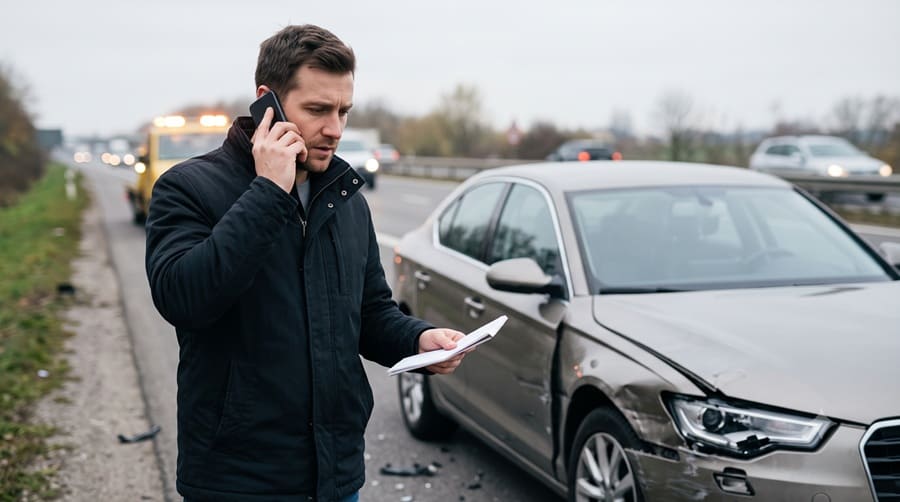
After a crash in Denver, an insurance adjuster may call before you even know how badly you were hurt. The request often sounds routine: “We just need a quick recorded statement to process your claim.” Whether you should agree depends almost entirely on one question: whose insurance company is calling?
The Short Answer Depends on Who Is Calling
| Caller | Do you have to give a recorded statement? | What to do |
| The other driver’s insurer | No. You have no contract with them and no duty to cooperate. | Politely decline; provide basic contact and claim information in writing if needed |
| Your own insurer | Usually your policy requires reasonable cooperation, which can include a statement | Cooperate, but schedule it, prepare, and stick to what you know |
| Your own insurer on an uninsured/underinsured motorist claim | Usually yes, under the policy | Treat it carefully: your insurer is effectively on the other side of this claim |
Why Adjusters Want a Recorded Statement
Adjusters use recorded statements to lock in your account early: road conditions, speed, where you were looking, your symptoms, prior injuries, and treatment plans. The recording can be replayed months later and compared with your medical records, photos, witness accounts, and deposition testimony. Any difference, even an innocent one, can be used to question your credibility or the seriousness of your injuries.
Fault matters a great deal in Colorado. Under the state’s comparative negligence statute (C.R.S. § 13-21-111), an injured person can recover only if their own negligence is less than the other driver’s, and the award is reduced by their share. A casual “I might have been going a little fast” in a recorded call can become the basis for assigning you fault.
The Other Driver’s Insurer: You Can Say No
The at-fault driver’s insurance company owes its duties to its own policyholder, not to you. You have no contract with it and generally no legal obligation to give it a recorded statement. You can provide your name, contact information, and the claim number, and tell the adjuster that you will provide information in writing or through your attorney.
A polite script works: “I’m not comfortable giving a recorded statement right now. Please send any questions in writing, and I’ll respond.” That isn’t uncooperative; it’s ordinary caution.
Your Own Insurer: Cooperation Is Usually Required
Most auto policies require you to cooperate with your own insurer’s investigation, and that can include a recorded statement. This matters most when you are making a claim under your own policy, such as medical payments coverage, which Colorado insurers must offer (C.R.S. § 10-4-635), or uninsured/underinsured motorist coverage (C.R.S. § 10-4-609).
On an uninsured or underinsured motorist claim, your insurer pays only what the at-fault driver should have paid, so it has a financial interest in limiting the claim. Colorado gives policyholders strong protection here: an insurer may not unreasonably delay or deny payment of a covered benefit, and a policyholder who proves it did may recover two times the covered benefit plus attorney fees (C.R.S. §§ 10-3-1115 and 10-3-1116). Cooperate, but do it carefully and on a schedule that lets you prepare.
If You Do Give a Statement
- Confirm who is calling. Get the adjuster’s name, company, claim number, and which party the company insures.
- Schedule it. You don’t have to answer questions during an unexpected call. Set a time when you have your documents in front of you.
- Review your records first: the police report, photos, medical discharge papers, and any notes you made soon after the crash.
- Answer only what is asked, briefly and truthfully. If you don’t know or don’t remember, say so. Don’t estimate speeds or distances.
- Describe symptoms, not predictions. Say what hurts and what treatment you have had; don’t guess about recovery.
- Don’t hide prior injuries. The real question is usually whether the crash caused a new injury or made an old one worse.
- Correct mischaracterizations. If the adjuster summarizes your answer in a way that changes its meaning, say so on the recording.
- Keep your own record. Colorado is a one-party consent state for recording conversations (C.R.S. § 18-9-303), so you can generally record your side of the call. Ask for a copy or transcript of the insurer’s recording too.
“I’m Fine” Is the Most Expensive Thing People Say
Soreness that seems minor on the first day often worsens as swelling and inflammation develop, and some injuries, such as concussions or disc injuries, aren’t diagnosed until follow-up imaging. A recorded “I’m fine, just a little sore” from the day after the crash can be played back against an MRI showing a herniated disc a month later. If you haven’t finished being evaluated, say that: “I’m still being evaluated by my doctors.”
When the Statement Can Shape the Whole Case
Fault-heavy cases are where early statements matter most. Among the results The Wilhite Law Firm lists on its case results page is a $2,500,000 settlement for a pedestrian hit by an inattentive driver. The firm’s listing doesn’t describe the underlying facts, but cases involving inattention typically turn on what each person was doing in the seconds before impact: where the pedestrian was, whether the driver was looking at a phone, and what each said afterward.
In cases like that, an injured person’s early recorded account of where they were standing, or an offhand comment about not seeing the car, can become a central piece of the insurer’s argument for shared fault. The safer path is to let the physical evidence, witnesses, and records establish the facts first.
Past results do not guarantee similar outcomes. Every case depends on its own facts.
Deadlines Keep Running While You Talk to Insurers
Insurance conversations don’t stop the clock on a lawsuit. In Colorado, most claims for injuries from a motor vehicle crash must be filed within three years (C.R.S. § 13-80-101). Colorado law also prohibits insurers from unfair claims practices such as misrepresenting policy provisions or failing to promptly investigate (C.R.S. § 10-3-1104), and the Colorado Division of Insurance accepts complaints from consumers who believe an insurer has acted improperly.
Many people in the Denver area ask Denver Personal Injury Attorneys or another firm to review a recorded statement request before responding, particularly when injuries are serious or fault is disputed. For a sense of how claims move from the first adjuster call to a resolution, see this overview of how a personal injury settlement works.
Frequently Asked Questions
Do I have to give a recorded statement to the other driver’s insurance company?
No. You generally have no legal obligation to give a recorded statement to the at-fault driver’s insurer.
Do I have to give a recorded statement to my own insurance company?
Usually your policy requires reasonable cooperation, which can include a statement. You can still schedule it, prepare, and limit your answers to what you know.
Can I record the call with the adjuster in Colorado?
Generally yes. Colorado allows a conversation to be recorded with the consent of one party, which can be you.
What should I never say in a recorded statement?
Avoid guesses about speed or distance, statements like “I’m fine,” apologies or admissions of fault, and predictions about your recovery.
How long do I have to file a car accident claim in Colorado?
Generally, three years from the crash for injury claims arising from a motor vehicle accident.
Disclaimer
This article provides general information about insurance claims in Colorado and is not legal advice. Reading it does not create an attorney-client relationship. Insurance policies differ, and every claim depends on its facts. For advice about your situation, consult a licensed Colorado attorney.