
By Mike Rainwater, Founding Partner, Rainwater, Holt & Sexton | Reviewed for legal accuracy, September 2026
Rights don’t protect themselves. That’s the part most people don’t think about until they’re already in the middle of an insurance dispute, wondering why their claim isn’t going the way they expected. After an accident, you have legal rights — to compensation, to fair treatment from insurers, to pursue a claim if someone else’s negligence caused your injury. But exercising those rights requires knowing what they are and actively protecting them. In Arkansas, where accident victims regularly face pushback from insurers and liable parties, the gap between what you’re entitled to and what you actually recover often comes down to how well you protected your position from the start.
The steps below apply whether the crash happened on I-30 in Little Rock, a rural county road, or a parking lot in Fayetteville. None of them require a law degree. They do require acting quickly, staying quiet at the right moments, and knowing what Arkansas law actually allows.
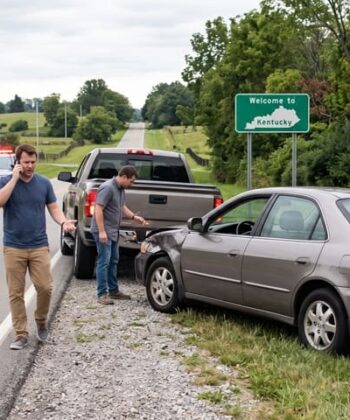
Document the Scene Before Anything Gets Moved or Changed
Evidence disappears fast. Vehicles get repaired. Roads get cleared. Witnesses leave. Weather changes road conditions quickly. Whatever happened at the scene — capture it before the scene gets cleaned up.
Call 911 even if the damage looks minor. A police report creates an independent, time-stamped account of the accident that’s harder for an insurer to dispute than competing versions of what happened after the fact. Get the report number before you leave, and note the responding officer’s name and badge number.
Take photos of vehicle positions, road conditions, traffic signals, skid marks, property damage, and visible injuries. Video if you can. Witness names and numbers before they walk away. If the accident happened at a business or on someone’s property, identify the owner and note whether surveillance cameras are visible. That footage can be subpoenaed, but only if you move quickly — businesses routinely overwrite security recordings within days.
The documentation you gather in the first hour is often the most valuable evidence in the entire case.
Know What You’re Not Required to Do
This one surprises people. After an accident, you are not required to give a recorded statement to the other party’s insurance company. You are not required to sign any medical authorization they send over. You are not required to accept the first offer made, or any offer, before you’re ready.
That distinction matters: it applies to the at-fault driver’s insurer, not necessarily your own. Most Arkansas auto policies include a cooperation clause requiring you to report the accident and answer reasonable questions from your own carrier. Cooperate with your insurer under your policy’s terms — but you’re under no obligation to give a recorded statement or sign a broad medical authorization for the company that may end up owing you money.
Insurance adjusters operate with urgency and confidence for a reason: they want you making decisions before you fully understand your situation. A recorded statement can be clipped, taken out of context, or used to pin liability on you for something you said casually. A broad medical authorization can give the insurer access to your entire medical history, not just records related to the accident. Know what you’re agreeing to before you agree to anything.
Get Medical Care and Keep Getting It
Two things happen when you seek medical treatment promptly: your injuries get treated, and a medical record is created documenting the link between the accident and your condition — a link that gets harder to establish the longer you wait.
Consistency matters just as much. Gaps in treatment give insurance companies room to argue you recovered, that the injury wasn’t serious, or that something else caused your current symptoms. Keep your appointments. If you can’t afford continued treatment, talk to an attorney before stopping — there may be options you’re not aware of, including treatment on a lien basis.
Understand Arkansas’s Statute of Limitations
Under Ark. Code § 16-56-105, most Arkansas personal injury claims — including car accidents, motorcycle crashes, and slip-and-falls — must be filed within three years of the date of injury. Wrongful death claims carry the same three-year window under Ark. Code § 16-62-102, measured from the date of death. Medical malpractice claims run shorter: two years from the date of the negligent act under Ark. Code § 16-114-203. Claims against a city, county, or state entity can carry much shorter notice deadlines, sometimes measured in months rather than years, so an accident involving a government vehicle or government property should be flagged to an attorney immediately.
Miss the applicable window and the right to pursue compensation is gone, regardless of how strong the case might have been. Three years sounds like a long time. It isn’t, especially in cases involving ongoing treatment, delayed diagnoses, or situations where liability takes time to establish. Evidence gets harder to gather. Witnesses get harder to locate. Starting the legal process earlier preserves more options; don’t wait until the deadline is approaching.
How Shared Fault Affects What You Can Recover
Insurers frequently argue that the injured person shares some of the blame, because doing so lowers what they owe. Arkansas allows that argument, but within limits. Under the state’s modified comparative fault rule,
Ark. Code § 16-64-122, an injured person can still recover damages as long as their own share of fault is under 50%. The recovery is simply reduced by that percentage — someone found 20% at fault on a $200,000 claim would recover $160,000. But once fault reaches 50% or more, Arkansas law bars recovery entirely.
That single number is why insurance adjusters push so hard, so early, to get injured people to admit even partial responsibility in a phone call or recorded statement. A casual comment made before an attorney is involved can become the basis for a fault allocation that follows the case for years.
When the Insurance Company Moves Faster Than You Do
Insurance adjusters are trained to open a file, assess exposure, and, in some cases, extend an early settlement offer before the injured person has finished treatment or gathered supporting records. Publicly available case summaries from Arkansas injury firms illustrate how that timeline plays out in practice.
Rainwater, Holt & Sexton, a Little Rock-based firm that has represented injured Arkansans for decades, publishes examples of resolved claims on its case results page — a practice that gives the public a sense of how documentation and timing shape an outcome.
In one resolved Arkansas auto accident matter reflected in that record, a driver suffered multiple fractures and a collapsed lung after being struck by another vehicle. Identifying details have been withheld to protect the client’s privacy. Rather than accepting an early settlement offer, the claim moved forward only after treatment was complete extent of the injuries had been documented. The case ultimately resolved for $625,000. Case circumstances vary, and past results do not guarantee or predict a similar outcome in any other case — but the sequence is instructive: the settlement reflected the documented, completed picture of the injury, not the insurer’s first number.
Don’t Post About It
Social media is one of the most reliable ways people accidentally damage their own claims. A photo from a weekend event, a comment about feeling better, a post about returning to physical activity — all discoverable, all usable to contradict your account of how the injury has affected your life.
Go quiet on social platforms entirely until the case is fully resolved. That includes family members posting about it on your behalf.
Frequently Asked Questions
Do I have to talk to the other driver’s insurance company after an accident in Arkansas?
No. You’re not required to give a recorded statement or accept a settlement from the at-fault driver’s insurer. You may have a duty to cooperate with your own insurance company under your policy’s terms, but that obligation doesn’t extend to the other party’s carrier.
What happens if I’m partly at fault for the accident?
Under Arkansas’s modified comparative fault rule (Ark. Code § 16-64-122), you can still recover damages as long as your share of fault is under 50%. Your recovery is reduced by your percentage of fault, and eliminated entirely if you’re found 50% or more responsible.
How long do I have to file a claim in Arkansas?
Most personal injury claims must be filed within three years of the date of injury under Ark. Code § 16-56-105. Claims against government entities, medical malpractice claims, and cases involving minors can follow different, often shorter, timelines.
Can I still recover damages if I didn’t seek medical treatment right away?
It’s harder, not impossible. A gap between the accident and treatment gives insurers room to argue the injury wasn’t serious or wasn’t caused by the accident. Seeking care promptly and consistently strengthens the medical record connecting your injury to the crash.
Should I post about my accident or recovery on social media?
It’s best to avoid it entirely until the claim is resolved. Photos, comments, or check-ins — even from friends or family posting on your behalf — can be used to dispute your account of how the injury has affected your life.
Rights Don’t Enforce Themselves
It is one thing to know you have rights; it is another entirely to stand up and claim them. In the real world, your recovery depends on the concrete steps you take next. The clock ticks faster than you think, and the window to protect yourself narrows by the day. That is why the choices you make in the quiet, chaotic moments right after an accident carry so much weight.
Disclaimer
This article is for general informational purposes only and does not constitute legal advice. Laws change, and the facts of every accident are different; nothing here should be relied on as a substitute for consulting a licensed attorney about your specific situation. Case summaries and settlement figures referenced above are drawn from publicly available records, with identifying details withheld to protect client privacy. Past results do not guarantee or predict a similar outcome in any future case.