
By Jose Calderon, Founder & Trial Attorney, The Calderon Law Firm | Reviewed for Legal Accuracy. Updated: September 2026
Motorcycle collisions often happen in a matter of seconds, but the reasons behind them are usually tied to preventable driver mistakes.
Unlike cars, motorcycles are smaller, faster to overlook, and more exposed to impact. This makes even minor driver errors potentially serious. In many crash cases, investigators find that the accident was not caused by one single issue but by a clear driving mistake that could have been avoided. Understanding these errors helps explain why so many motorcycle crashes occur on everyday roads.
Error 1 — Failure to Check Blind Spots
One of the most common driver mistakes is failing to properly check blind spots. Motorcycles are smaller than cars and can easily disappear from a driver’s side or rear view.
Many drivers rely only on mirrors, but mirrors alone cannot show everything. A quick shoulder check is necessary, especially before changing lanes or merging.
When drivers skip this step, motorcycles can be directly in the path of a lane change, leading to sudden and unavoidable collisions.
Error 2 — Unsafe or Abrupt Lane Changes
Another frequent cause of motorcycle crashes is unsafe lane changing. Texas law, under Transportation Code § 545.104, requires drivers to signal continuously for at least 100 feet before turning or changing lanes. Some drivers shift lanes without signaling or without checking the surrounding traffic carefully.
Motorcycles often travel faster than expected, which means a driver may misjudge their distance or speed. This creates a dangerous situation where the motorcycle is suddenly cut off or forced to brake sharply.
Abrupt lane changes also leave very little time for riders to react, especially in heavy traffic or multi-lane roads where space is limited.
Error 3 — Not Yielding Right-of-Way at Intersections
Intersections are one of the most dangerous places for motorcycles. Under Transportation Code § 545.151, a driver approaching an intersection must yield to a vehicle already in or approaching the intersection closely enough to be a hazard. Many collisions occur when drivers fail to yield the right-of-way while turning left or entering traffic.
Drivers often underestimate how fast a motorcycle is approaching. Because motorcycles appear smaller, they can seem farther away than they actually are.
This misjudgment leads to drivers pulling out or turning in front of motorcycles, resulting in direct impact crashes that often cause serious injuries.
Error 4 — Distracted Driving
Distracted driving continues to be a major factor in motorcycle collisions. Texas Transportation Code § 545.4251 bans reading, writing, or sending electronic messages while operating a moving vehicle. Even a few seconds of lost attention can prevent a driver from noticing a motorcycle nearby.
Common distractions include mobile phones, navigation systems, music controls, or conversations inside the vehicle. These distractions reduce reaction time and awareness of surroundings.
When a driver is distracted, they may fail to see a motorcycle stopping, turning, or approaching an intersection, which increases the risk of a sudden impact.
Error 5 — Speed Misjudgment and Aggressive Driving
Speed plays a major role in how motorcycle accidents happen. Drivers often misjudge how fast a motorcycle is traveling or how close it actually is.
If a driver believes they have more time to act than they really do, they may attempt a turn or lane change that becomes dangerous.
Aggressive driving behaviors such as speeding, tailgating, or rapid lane switching further increase risk. These actions reduce reaction time and make collisions more severe when they occur.
Error 6 — Failure to Maintain Safe Following Distance
Maintaining a safe distance behind other vehicles is essential, especially when motorcycles are involved. Transportation Code § 545.062 requires drivers to maintain an “assured clear distance” that accounts for speed, traffic, and road conditions. Some drivers follow too closely, leaving little space to react if the motorcycle slows down or stops suddenly.
Motorcycles can decelerate quickly, and if a driver is too close, they may not have enough time to brake safely.
This often leads to rear-end collisions, which can throw riders off balance and cause serious injuries even at lower speeds.
How These Driver Errors Often Overlap in Real Crashes
In many motorcycle collisions, more than one driver error happens at the same time. For example, a driver may be distracted while also failing to check blind spots before changing lanes.
These overlapping mistakes make crashes more complex and harder to analyze. Investigators often look at the full sequence of events rather than focusing on a single action.
Understanding how these errors combine helps explain why some accidents seem sudden, even though they are the result of multiple avoidable actions.
Evidence Used to Identify Driver Errors After a Crash
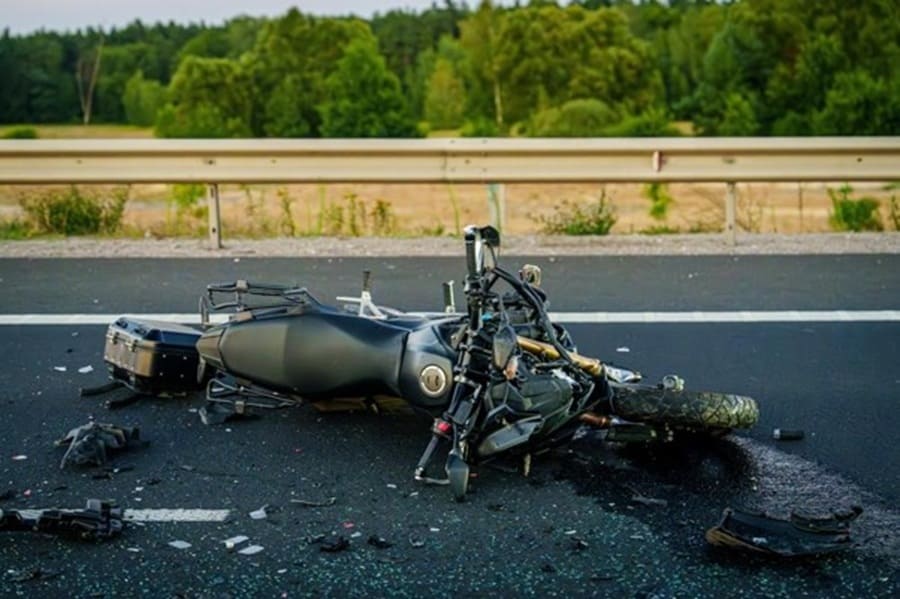
After a motorcycle collision, investigators use several types of evidence to determine what happened and which driver errors were involved.
Key Evidence Sources
- Traffic or surveillance camera footage
- Skid marks and road evidence
- Vehicle damage patterns
- Witness statements
- Phone or digital activity records
Each piece of evidence helps build a clearer timeline of the crash. When combined, they can show how and when driver mistakes occurred.
Example: How Fault Evidence Changes an Outcome
In one case, Jose Calderon represented a client injured in a non-commercial motor vehicle collision after the insurance company offered just $26,000 to settle. Rather than accept an offer that didn’t reflect the client’s actual damages, the case was taken to trial. Following the client’s back surgery, the case ultimately resolved for $1.9 million. The same principle applies directly to motorcycle collisions: an early, low settlement offer often reflects an insurer’s initial read on fault, not necessarily what the evidence actually supports once it’s fully developed.
Why Identifying Driver Error Matters in Motorcycle Collision Cases
Understanding driver errors is important because it helps establish responsibility for the crash. Insurance companies and legal reviewers rely on these findings to determine fault and evaluate claims.
In serious injury cases, these same errors are often what a motorcycle accident attorney will examine closely to understand how the collision unfolded and whether proper care was taken by all drivers involved.
Insurers sometimes weigh rider behavior differently than driver behavior when evaluating a claim; a closer look at how insurance companies evaluate motorcycle accident claims explains why that distinction matters. Clear identification of errors also helps reduce disputes and supports more accurate claim resolutions.
Conclusion
Motorcycle collisions are often the result of preventable driver mistakes rather than unpredictable events. Errors such as blind spot failure, unsafe lane changes, distracted driving, and poor speed judgment all contribute to serious crashes.
When these mistakes overlap, the situation becomes even more complex, requiring detailed investigation and evidence review. Understanding these common driver errors makes it easier to see how motorcycle accidents happen and why careful attention on the road matters to everyone involved.
Authorities & Sources
- Tex. Transp. Code § 545.104 – Signaling turns and lane changes
- Tex. Transp. Code § 545.151 – Right-of-way at intersections
- Tex. Transp. Code § 545.4251 – Use of a wireless communication device while driving
- Tex. Transp. Code § 545.062 – Following distance
- FindLaw: Motorcycle Accidents Overview (retained from the original article)