
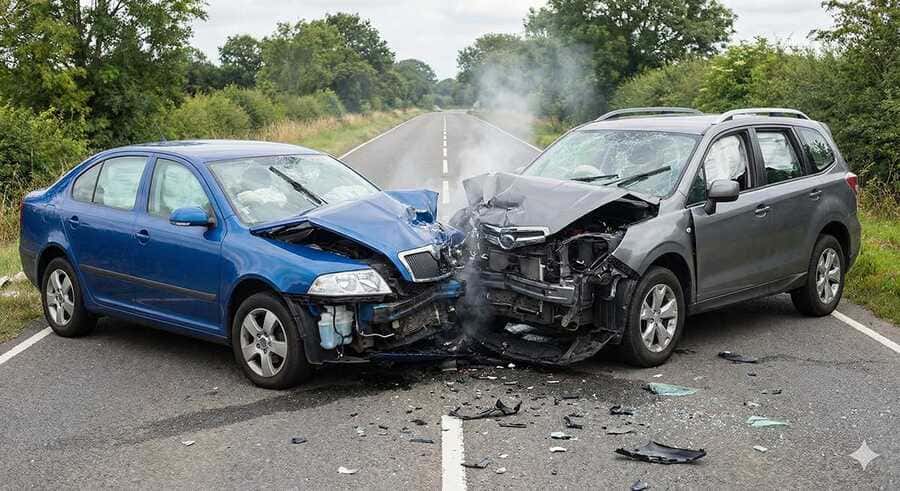
Imagine you are driving through an intersection in Coral Gables. You have the green light, but you are driving 5 mph over the speed limit. Suddenly, another car runs a red light and slams into you.
Clearly, the driver who ran the red light is mostly at fault. But are you partially to blame for speeding? And if you are, does that mean you can’t get paid for your injuries?
In Florida, the answer to that question changed radically in 2023. The state moved from a system of “pure” comparative negligence to “modified” comparative negligence. This shift has introduced a “51% bar” that could leave many accident victims with zero compensation, even if they suffered severe injuries.
Here is what Miami drivers need to know about the new “Blame Game” being played by insurance companies.
From “Pure” to “Modified”: What Changed?
To understand the risk, you have to understand how it used to work. Florida was previously a “pure” comparative negligence state. This meant that even if you were 90% at fault for an accident, you could still sue the other driver for the 10% they were responsible for. If your damages were $100,000, you would receive $10,000. It was a system designed to ensure that everyone paid their fair share, no matter how small.
Under the new modified comparative negligence standard (introduced by HB 837), if a jury finds you to be more than 50% at fault for your injuries, you are barred from recovering any damages at all.
If you are 50% at fault, you can recover half your damages. But if that number tips to 51%, you get nothing.
The Insurance Adjuster’s New Goal
This change has fundamentally altered how insurance companies handle claims. In the past, arguing that a victim was partially at fault was a way to reduce the payout. Now, arguing that the victim is partially at fault is a way to eliminate the payout entirely.
“Under the old system, being partially at fault just meant a smaller settlement check; now, it can mean no check at all,” says Jose M. Francisco, a Miami auto accident attorney (abogado de accidente de carro) who fights these liability disputes daily. “Insurance adjusters are no longer just trying to save money—they are incentivized to push that liability number past the tipping point. The difference between 50% and 51% is now everything.”
Adjusters will look for any reason to pin the majority of the fault on you: Did you fail to use a turn signal? Were you looking at your GPS? Were your headlights on during that rainstorm? Were you driving slightly over the limit?
In a “he-said, she-said” accident scenario—common in lane-change crashes or parking lot disputes—the insurance company will fight aggressively to frame your actions as the primary cause of the accident.
Why Accident Reconstruction is Now Vital
Because the margin for error is now so slim, the evidence you gather immediately after a crash matters more than ever. It is no longer enough to simply show the other driver hit you; you must proactively prove that your own contribution to the accident was minimal or non-existent.
This often requires the resources of a dedicated law firm. Attorneys use accident reconstruction experts who can analyze skid marks, vehicle crush damage, and “black box” data (Event Data Recorders) to scientifically prove who did what.
For example, in the speeding scenario mentioned earlier, an expert might prove that your speed did not contribute to the crash because the other driver ran the red light so abruptly that the collision would have occurred even if you were driving under the limit. Without that expert analysis, a jury might be swayed by the insurance company’s argument that “speeding caused the crash,” pushing your liability over the 51% mark.
The “Slippery Slope” of Recorded Statements
One of the most dangerous traps under this new law is the recorded statement. Shortly after an accident, the other driver’s insurance adjuster will call you, sounding friendly and concerned, asking for “just a quick statement to clear things up.”
They are trained to ask leading questions designed to get you to admit fault. A simple phrase like, “I looked down for a second to change the radio,” can be used to argue that you were distracted, potentially shifting the majority of the blame to you.
Under the 51% rule, that one sentence could cost you your entire settlement. This is why legal professionals universally advise against giving recorded statements without an attorney present.
Protecting Your Rights in a Modified Negligence State
Florida’s new tort laws were designed to reduce the number of lawsuits, but they have also increased the risk for honest drivers who make minor errors. The difference between 50% fault (getting paid) and 51% fault (getting nothing) is often a matter of effective legal argument and solid evidence.
When the stakes are this high, you cannot rely on the insurance company to play fair. They are protecting their bottom line; you need someone to protect yours.