By Mark M. Esposito, Of Counsel, Friedman Fisher Verity PLLC, Richmond · Member of the Virginia State Bar | Updated November 2026
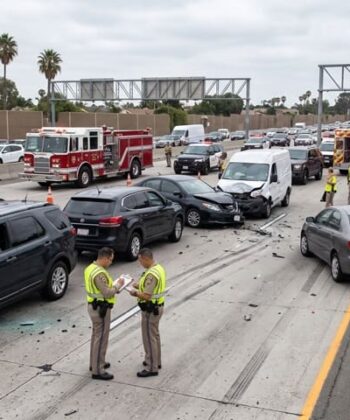
A crash with a tractor-trailer is not just a bigger car accident. The truck may belong to one company, the trailer to another, and the driver may work for a third. Federal safety rules apply, the insurance policies are larger and more layered, and much of the evidence sits in the trucking company’s files. That is a large part of why people hurt in these crashes often bring in a lawyer, and it shapes what that lawyer actually spends time doing.
This article walks through that work step by step, for people injured in Virginia, and is candid about what a lawyer can and cannot change.
Quick Answer
A truck accident lawyer identifies every company that may be responsible, preserves the records trucking companies control, checks the driver and carrier against federal safety rules, documents the injuries and their cost, deals with the insurers, and files suit if needed before Virginia’s two-year deadline. In Virginia, the lawyer also has to anticipate the defense that the injured person was partly at fault, because even a small share of fault can bar recovery here.
Why Truck Crash Claims Are Different
More Parties, More Policies
Most car crashes involve two drivers and two insurers. A truck crash can involve the driver, the motor carrier, the owner of the tractor or trailer, a shipper that loaded the cargo, and a maintenance shop. Federal rules require most interstate carriers hauling general freight to carry at least $750,000 in liability coverage, with higher minimums for oil and hazardous materials, and many carriers carry excess or umbrella policies on top of that.
Common Causes
Truck crashes often trace back to driver fatigue, following too closely, speeding for conditions, distraction, poor brake or tire maintenance, and cargo that was overloaded or not secured. Several of these are covered by federal rules, including the hours-of-service limits on driving time and the driver qualification requirements for hiring and testing drivers. A violation does not prove a case by itself, but it is often where an investigation starts.
What the Lawyer Actually Does
The First Conversation
The first meeting is usually about facts and timing: how the crash happened, what injuries resulted, what insurance is involved, and whether anything the injured person did could be used against them. Most injury lawyers do not charge for this meeting. It is also the right time for the injured person to ask questions, including how fees and case costs work and who will handle the file day to day.
Preserving Evidence Before It Disappears
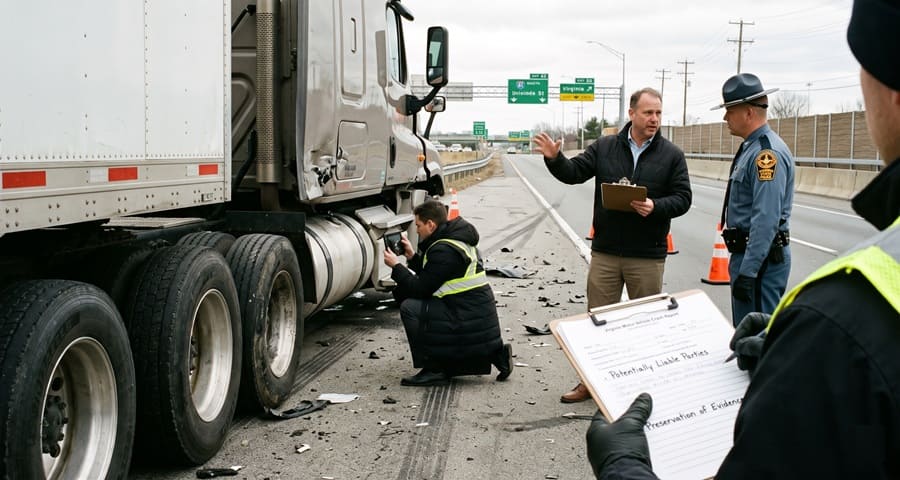
This is often the most time-sensitive part of the work. Trucks carry electronic logging devices that record driving hours and engine control modules that can capture speed and braking before impact. Carriers also keep dispatch messages, inspection reports, and driver files. Federal rules generally require carriers to keep hours-of-service records and supporting documents for only six months, and dashcam footage may be overwritten far sooner. A lawyer typically sends the carrier a written preservation letter early, so those records are kept for the case.
Investigating Who Is Responsible
Beyond the police report and witness statements, a truck crash investigation often looks at the carrier’s own safety history. FMCSA’s Safety Measurement System shows a carrier’s inspection and violation record, which can reveal whether problems like hours violations or poor maintenance were a pattern. Depending on the facts, the lawyer may also work with an accident reconstruction expert, a trucking safety expert, or a mechanic who inspects the truck.
For people hurt on I-95, I-64, or I-295 around the capital, speaking with a Richmond truck accident lawyer early can matter most for this reason: the evidence that answers the liability question is largely in the trucking company’s hands, and some of it has a short shelf life.
Answering the Fault Question
Virginia is one of a few jurisdictions that still use pure contributory negligence. If the injured person’s own carelessness helped cause the crash, even slightly, the defense can argue that the claim is barred entirely. Truck insurers know this, and they often focus on the injured driver’s speed, lane position, or phone use. Part of a lawyer’s job is to gather the evidence that answers those arguments before they are made.
Documenting the Losses
A claim is only as strong as the proof of what the injury cost. That includes medical bills and future treatment, lost wages and reduced earning ability, property damage, and the pain and limitations the injury causes. In serious cases, it may involve physicians, vocational experts, or economists to explain long-term needs.
Dealing With the Insurers
Trucking insurers usually respond quickly after a serious crash, and early contact from an adjuster is common. A lawyer handles those communications, presents a demand supported by the evidence, and evaluates offers against what the case is realistically worth. This guide on how to tell whether an accident settlement is fair covers some of the factors involved. The injured person still makes the final decision on whether to accept any offer.
Filing Suit When Needed
Most claims resolve without a trial, but not all. If talks stall, the lawyer files suit, which in Virginia generally must happen within two years of the injury under Virginia Code § 8.01-243. Claims involving a government vehicle or agency can require written notice much sooner. Once a suit is filed, the lawyer handles discovery, depositions of the driver and company witnesses, motions, and, if necessary, trial.
What Hiring a Lawyer Can and Cannot Do
Realistic Expectations
No lawyer can guarantee a particular result, and no ethical lawyer should promise one. What a lawyer can do is make sure the responsible parties are identified, the evidence is preserved, the injuries are documented, and the injured person is not negotiating alone against a carrier and its insurer. For an overview of the broader process, see these legal steps that can help truck accident victims.
How Fees Usually Work
Most truck accident lawyers work on a contingency fee, meaning the fee is a percentage of the recovery and is owed only if there is one. Virginia’s professional conduct rules require a contingency fee agreement to be in writing and to explain how the fee is calculated and whether case expenses are deducted before or after the fee. Case costs, such as expert fees and filing fees, are a separate item, so it is worth asking how they are handled if the case does not succeed.
Time to Focus on Recovery
For many people, the practical benefit is time. Medical appointments, missed work, and a damaged vehicle are already a lot to manage. Having someone else handle records requests, insurer calls, and deadlines lets the injured person focus on getting better.
The Bottom Line
A truck accident lawyer’s work centers on evidence, responsibility, and timing. In Virginia, the contributory negligence rule and short evidence-retention windows make the early weeks after a crash especially important. Knowing what a lawyer does, and asking clear questions about fees and process, helps injured people decide what kind of help they need.
Disclaimer
This article provides general information about truck accident claims in Virginia and is not legal advice. Reading it does not create an attorney-client relationship. Every case depends on its own facts, and past results do not guarantee or predict the outcome of any future case. Speak with a licensed Virginia attorney about your situation.