
By Daniel Johnson, Esq., Founding Partner, Johnson Garcia LLP | Maritime, Premises Liability & Personal Injury | Updated September 2026
Waterfront construction can involve more than a building permit. A dock, pier, boat lift, or slip may raise federal navigation rules, state environmental requirements, local zoning, title questions, and private restrictions at the same time.
The safest approach is to identify the structure, the waterbody, the work below the waterline, and the intended use before construction begins. A permit that covers one part of the project does not necessarily satisfy every other agency or private restriction.
Docks, Piers, and Boat Slips Are Not the Same Thing
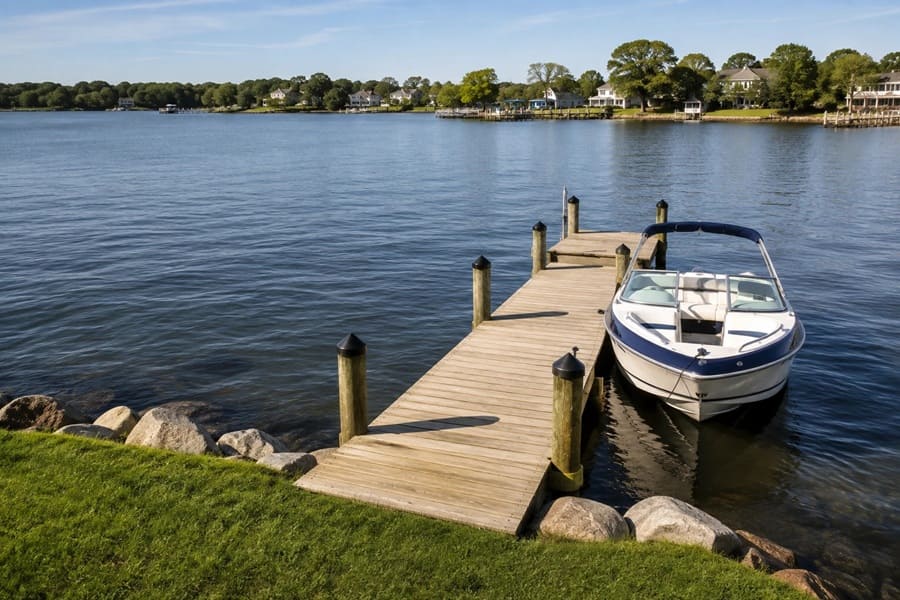
These terms are sometimes used loosely, but the physical differences can affect permitting and engineering. A dock may be floating or fixed and is commonly used for access and boat handling. A pier is generally a fixed structure extending from shore, often supported by piles. A boat slip is a defined mooring space within or alongside a dock system rather than a separate structure by itself.
For a practical comparison of floating and fixed systems, materials, vessel size, water-level changes, and anchoring, review the structure comparison here. That contractor resource is useful for physical design context, but permitting and property-right questions should be verified independently with the agencies and laws that apply to the site.
Federal Permits: Section 10 and Section 404 Cover Different Things
The original article treated Section 10 of the Rivers and Harbors Act and Section 404 of the Clean Water Act as though both apply to most waterfront projects. The distinction is more precise.
Section 10 generally requires U.S. Army Corps of Engineers authorization for structures or work in, over, or affecting navigable waters of the United States. The Corps specifically lists piers, docks, marinas, ramps, floats, boat lifts, and similar structures among activities that may require Section 10 authorization. U.S. Army Corps of Engineers – Section 10 permitting overview
Section 404 is different. It regulates discharges of dredged or fill material into waters of the United States, including wetlands. A project that involves piles, dredging, riprap, shoreline fill, excavation, or other placement of material may raise Section 404 issues, but a structure does not require a Section 404 permit merely because it is a dock. U.S. EPA – Clean Water Act Section 404 permitting
The 2026 Nationwide Permits Matter
The Corps reissued its Nationwide Permits in 2026. These general permits can authorize categories of work with minimal individual and cumulative environmental effects, but they do not create a blanket exemption for residential waterfront projects. U.S. Army Corps of Engineers – 2026 Nationwide Permits
Whether a project qualifies depends on the activity, district-specific regional conditions, general conditions, and whether preconstruction notification is required. In some cases an individual permit may still be necessary.
State, Local, and Private Approvals Still Matter
Federal authorization does not replace state or local requirements. Depending on the property, a project may also need approval from a state environmental or natural-resources agency, county or municipal building officials, a coastal or shoreline authority, or another local body.
HOA covenants and deed restrictions are separate again. A government permit does not override a valid private restriction, and HOA approval does not substitute for a government permit.
Riparian and Littoral Rights Are State-Specific
Waterfront ownership does not create unlimited rights to use the water or submerged land. Riparian and littoral rights, boundary rules, public-trust doctrines, and ownership of submerged lands vary significantly by state.
Before design work becomes expensive, review the deed, survey, shoreline boundary, easements, neighboring access, and any state rules governing how far a structure may extend. A title company, surveyor, local permitting office, or attorney familiar with that state’s waterfront law may be needed.
Environmental Review Can Affect Design and Timing
A foundation method that works structurally may still raise environmental concerns. Wetlands, submerged vegetation, fish habitat, endangered species, shoreline stabilization, dredging, and turbidity can change both the permit path and the construction method.
The 2026 Nationwide Permits include general conditions addressing endangered species and other protected resources. Regional conditions can add more restrictions, which is another reason to check the Corps district responsible for the site rather than relying on a national summary alone.
Navigation Rights Can Limit Private Waterfront Use
Private waterfront rights remain subject to federal authority over navigation in navigable waters. A dock or pier cannot simply be placed where it obstructs navigation or conflicts with a Corps authorization.
The federal navigational servitude is a real limitation, but the compensation analysis is more nuanced than saying the government can always require modification without compensation. The result depends on the property interest affected, the location relative to the navigable water, and the government action involved.
Liability and Insurance Depend on State Law and Use
A dock or pier can create injury risks from wet surfaces, damaged decking, missing rails, poor lighting, electrical systems, ladders, boat traffic, and changing water conditions. If someone is injured, liability usually turns on the state law that applies, who controlled the property, what duty was owed, and what was known or reasonably discoverable about the hazard.
Visitor-status categories such as invitee, licensee, and trespasser remain important in some states, while other states use different premises-liability frameworks. A national article should not assume one duty rule applies everywhere.
For related premises-liability material, see Find Attorneys’ Premises Liability resources.
Insurance also needs a policy-specific review. Homeowner, landlord, commercial, marina, and marine policies can treat docks, watercraft, business use, rentals, storm loss, and liability differently. The policy language matters more than a general assumption that a standard homeowner policy does or does not cover a waterfront structure.
Firm-reported case example
Firm-reported, anonymized result. Johnson Garcia reports a confidential full-policy-limits recovery in a wrongful-death boating accident. The firm’s public results page does not provide the accident location, liability theory, or policy amount, so those details should not be inferred.
The result is relevant here only as a reminder that waterfront and boating incidents can involve serious injury, insurance, and overlapping legal issues. It is not a construction-defect case and does not predict the outcome or value of another matter.
Past results do not guarantee or predict a similar outcome.
Lifecycle Planning Goes Beyond the Initial Build
A fair cost comparison should use the same assumptions for each design: length, materials, foundation, water depth, soil or bottom conditions, access, anchors, lifts, utilities, and required permits.
Maintenance also has two parts. Surface care may involve cleaning or refinishing, while structural inspection concerns piles, fasteners, anchors, electrical components, ladders, and movement below the visible surface. A low-maintenance deck material does not eliminate the need to inspect the structure supporting it.
A Practical Pre-Construction Checklist
- Identify whether the project is a dock, pier, boat lift, slip, shoreline structure, or a combination.
- Confirm whether the water is federally navigable and whether Section 10 applies.
- Determine whether dredged or fill material will be discharged and whether Section 404 is implicated.
- Check the applicable 2026 Nationwide Permit, regional conditions, and any notification requirement.
- Review state, local, HOA, deed, and shoreline restrictions separately.
- Confirm title, easements, and waterfront boundaries before final design.
- Ask the insurer how the completed structure and its intended use will be covered.
- Keep permits, plans, inspections, maintenance records, and contractor documents together.
Frequently Asked Questions
Does every residential dock need both a Section 10 and Section 404 permit?
No. Section 10 concerns structures or work in or affecting navigable waters. Section 404 concerns discharges of dredged or fill material into waters of the United States. A project may implicate one, both, or neither, depending on the site and work.
Can a small dock qualify under a general permit?
Possibly. The Corps’ 2026 Nationwide Permits authorize qualifying categories of activities with minimal effects, but regional conditions, general conditions, and notification rules still apply.
Does a federal permit override local zoning or HOA rules?
No. Federal, state, local, and private approvals address different legal interests. One approval does not automatically cancel the others.
Can I rely on the contractor to handle every permit?
Only if the contract clearly assigns that responsibility and the required agencies accept the filings. Property owners should still confirm what permits are required and that approvals were actually issued.
Does homeowner’s insurance automatically cover a dock?
Not necessarily. Coverage depends on the policy, how the structure is classified, its use, exclusions, endorsements, and the type of loss or liability claim.
Authorities & Sources
- U.S. Army Corps of Engineers – Rivers and Harbors Act Section 10
- U.S. Army Corps of Engineers – 2026 Nationwide Permits
- U.S. EPA – Section 404 of the Clean Water Act
- U.S. EPA – Section 404 Permit Program
- U.S. EPA – Section 404 Enforcement
Disclaimer
This article provides general information about waterfront construction and is not legal, engineering, insurance, or environmental advice. Permit jurisdiction, riparian and littoral rights, submerged-land ownership, zoning, environmental review, premises liability, and insurance vary by state, locality, waterbody, and project. A contractor’s design recommendation does not establish legal compliance. Before construction begins, property owners should verify current requirements with the agencies and professionals responsible for the specific site.